
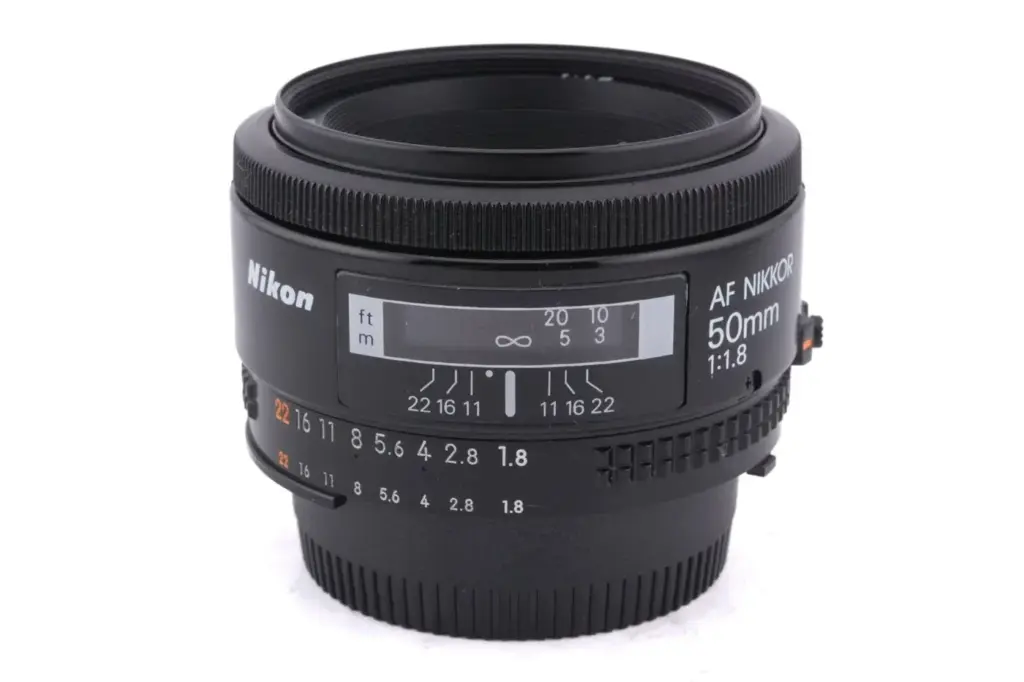
A 50mm lens is a standard prime lens whose field of view on a full frame camera is close to the natural look of everyday vision. It is compact, sharp, affordable and usually has a wide maximum aperture of f/1.8 or f/1.4, which makes it useful for low light, portraits and general shooting.
Why It Matters
The 50mm lens has stayed popular for decades because it does so many things reasonably well, for so little money. It is often the first prime lens people buy, and many keep it in the bag for years.
Understanding what it does well, and where it falls short, helps you decide whether to buy one and how to make the most of it.
Beginner What A 50mm Lens Is Good For
On a full frame camera, a 50mm lens sees a moderate, natural-looking slice of the scene, about 47 degrees across the diagonal. On an APS-C camera, it behaves like a 75mm lens, which is a good portrait length. On Micro Four Thirds, a 25mm lens gives the same view as a full frame 50mm.
Why It Is Popular
- It is small and light, so it is easy to carry all day.
- Its wide aperture lets in more light, so you can shoot indoors without flash.
- The simple optical design usually gives sharp images and low cost.
- It encourages you to move closer or farther to frame the subject.
Where It Works Best
| Use | Why It Fits |
|---|---|
| Portraits | Gives a flattering look from a few feet, with blurred background at wide apertures |
| Street photography | Natural view and compact size |
| Low light and events | Wide aperture and moderate focal length |
| Food and still life | Reasonable close focus and clean rendering |
| Everyday family photos | Fits one to three people without much distortion |
Getting Started
- Start at f/2.8 rather than wide open. Many 50mm lenses are noticeably sharper one or two stops down.
- Choose autofocus with a single point and place it on the nearest eye for portraits.
- Check your shutter speed. For handheld, use at least 1/60 second, or faster if the subject moves.
- Walk to frame the scene instead of searching for a zoom ring. Step back to include more, and step in to isolate details.
Common Mistakes
- Shooting everything at f/1.4 and missing focus, because depth of field is very thin up close.
- Expecting dramatic wide landscapes or very tight portraits, which need other focal lengths.
- Standing too close to faces, which exaggerates noses and foreheads.
- Buying a heavy premium version when a cheap f/1.8 would cover your needs.
Simple Creative Ideas
Try shooting a whole day with only the 50mm lens. Photograph strangers at a respectful distance in markets, take close frames of details such as hands and tools, and create environmental portraits with the subject in front of their workplace. At night, use a wide aperture to capture lit windows and street scenes handheld. The limits of one focal length push you toward more deliberate composition.
Handy for this: Speedlight Flash — add light anywhere. (affiliate link)
Advanced Optical Design, Sharpness And Rendering
Why 50mm Is The Standard
The name standard comes from a historical match between focal length and the size of the film frame. A focal length near the frame diagonal, about 43mm for 35mm film, gives a view that looks natural when viewed as a print. Lens makers settled on 50mm because it was easy to build with a six-element double Gauss design that gave a fast, sharp lens with low distortion. Many modern designs still derive from that layout. See focal length explained for the field of view calculation.
Aperture And Depth Of Field
At f/1.8, a 50mm lens focused at 6 feet has a depth of field of roughly 8 inches. At f/1.4 it is slightly less, and at f/8 it grows to several feet. Wide-open images from fast lenses often have lower sharpness, light fall-off and some color fringing at the edges, which improve by stopping down. For the tools to judge these effects, read lens aberrations and lens vignetting.
Bokeh And Rendering
Because the aperture opening is large and the lens is moderate in focal length, 50mm lenses can blur the background nicely, but the blur is not as strong as an 85mm at the same f-number and framing. Aperture blade shape and the number of blades change how out-of-focus highlights look. A lens with rounded blades keeps highlights circular when stopped down. See bokeh explained.
Versions And Trade-Offs
Budget f/1.8 lenses are light, sharp in the center and inexpensive. f/1.4 versions add a stop of light and usually improve build quality, but they are heavier and cost more. f/1.2 and premium designs focus on rendering and corner sharpness at wide apertures, with a large increase in price and size. Think of how often you will shoot at the widest setting before paying more. Compare with other designs in fast lenses and prime vs zoom lenses.
Testing A Copy
Shoot a flat target such as a brick wall at several apertures and check the center and corners. Also check for front or back focus by photographing a ruler at an angle. Copies vary slightly, so testing right after purchase lets you return a poor one while you still can. The lesson on lens testing has a step-by-step routine.
Focus Accuracy At Wide Apertures
At f/1.4 the depth of field is shallow enough that a small focus shift ruins an eye. Autofocus systems can show front or back focus, especially on DSLRs that use a separate focus sensor. Many cameras let you adjust focus for a particular lens by a few steps, and mirrorless cameras focus on the sensor itself, which removes this problem. Use eye detection when available, and take several frames at critical moments to be sure one is sharp.
Try It
- Set a 50mm lens to Aperture Priority and photograph a portrait subject at f/1.8, f/2.8 and f/5.6 from 6 feet away.
- Zoom in to the eyes at 100 percent and compare sharpness and depth of field in each frame.
- Take a walk and shoot only with the 50mm for an hour, moving to frame each picture.
- Review the results, and note which distances and apertures you used most often.
Common Questions
Is a 50mm lens good for portraits?
Yes, especially on APS-C cameras where it frames like a short telephoto. On full frame it works well for waist-up or environmental portraits, although many prefer 85mm for tight head shots.
Why is the 50mm f/1.8 so cheap?
Its design is simple, with few elements and a small size, so it costs little to make. It still gives high quality for the price, which is why it is often called the nifty fifty.
Does a 50mm lens change on a crop sensor?
The focal length stays the same, but the field of view narrows. On APS-C cameras it looks like about a 75mm lens, and on Micro Four Thirds a 50mm would look like 100mm.
Should I buy f/1.8 or f/1.4?
Choose f/1.8 for low cost, size and weight. Choose f/1.4 if you often shoot in dim light or want better build and a shallower look. Both are good for beginners.
Related Lessons
- Focal Length Explained for what a 50mm view means on different cameras.
- Prime Vs Zoom Lenses to see where a fixed lens fits in a kit.
- Fast Lenses to learn what wide apertures cost and give.
- Bokeh Explained for how the blur from a 50mm is formed.
- Lens Testing to check sharpness and focus of your own copy.
Gear That Helps With This
Hand-picked kit that makes this lesson easier to put into practice.
Some links are affiliate links: if you buy through them we may earn a small commission at no extra cost to you. How this works.