
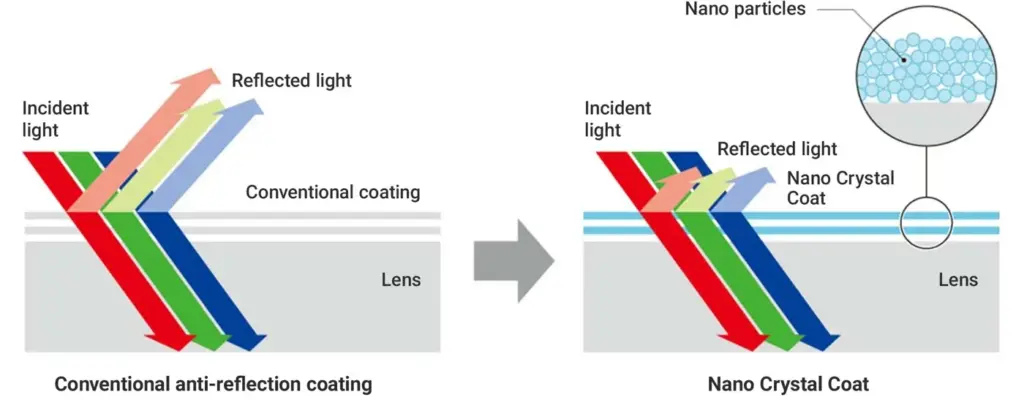
Lens coatings are microscopically thin layers applied to glass surfaces that reduce reflections, which cuts flare and ghosting and raises contrast and color accuracy. Brands name them differently, such as nano crystal or air sphere coatings, but all work by controlling how light bounces between the many glass elements.
Why It Matters
Every glass surface reflects a small part of the light that hits it, roughly four percent for plain uncoated glass. A modern zoom may have fifteen or more surfaces, so without coatings a large share of light would bounce around inside the lens and wash out the image.
Coatings are one reason modern lenses give clean, contrasty pictures even when shooting toward bright lights. Understanding them helps you compare lenses, protect them and know what they can and cannot do.
Beginner What Lens Coatings Do
How They Work
A coating is a layer, or a stack of layers, a fraction of a wavelength thick. Light reflecting from the top and bottom of the layer interferes with itself and cancels, so less light bounces back and more passes through. This is called anti-reflective coating.
Benefits You Can See
– Higher contrast and richer color, since stray light does not fill the shadows.
– Less flare, the hazy glow and streaks around bright lights. See lens flare.
– Less ghosting, the colored spots that mirror a bright source.
– More light transmission, so brighter images and more accurate color.
Common Coating Types
| Type | Purpose |
| Single layer | Basic reduction in older lenses |
| Multi-coating | Several layers for wider range of colors |
| Nano structure | Tiny structures that reduce reflection at steep angles |
| Fluorine | Repels water, oil and dust on the outer surface |
Names such as Nano Crystal Coat, ASC, Super Spectra, Air Sphere and T* describe each brand’s version of the same idea.
Front And Rear Coatings
The front element often has a hard fluorine layer so water beads off and smudges wipe away. Inside, each element has an anti-reflective coating tuned to the glass type. Rear elements are important too, since light reflecting between the sensor and the rear glass can create flare.
Common Mistakes
– Believing a coating removes all flare. It reduces it, not eliminates it.
– Cleaning a coated lens with rough cloths or harsh chemicals.
– Assuming a newer name always means a better lens.
– Ignoring lens hoods because the lens is well coated.
Handy for this: ND And Polarizing Filters — control light and glare. (affiliate link)
Advanced Choosing And Caring For Coated Lenses
Where Coatings Matter Most
Coatings matter most in difficult light: backlit portraits, sunsets, night scenes with street lamps and any shot with a bright source in or near the frame. In a flat, overcast scene the difference is small. Zoom lenses with many elements gain more from coatings than simple primes. For the broader picture of flare control, see preventing unwanted flare.
What Coatings Cannot Fix
Coatings cannot correct optical problems such as distortion, softness or chromatic aberration, which come from lens design, covered in lens aberrations and chromatic aberration. Special glass and aspherical elements address those, as in aspherical lens elements. A coating can also not stop light that enters at a very steep angle and hits the lens barrel.
Vintage Versus Modern
Older lenses with simple single coatings flare more, which some photographers and filmmakers enjoy for its glow and low contrast. Modern coatings give cleaner results. If you want a vintage character, see vintage lenses. Anamorphic lenses add streaks by design, discussed in anamorphic lenses.
Filters And Coatings
A cheap filter in front of a premium lens can undo much of the coating benefit, because it adds two more reflecting surfaces. If you use a protective filter, buy a multi-coated one from a reputable maker, and remove it when shooting toward bright lights. See camera filters guide for choices.
Lens Hoods
A lens hood blocks light from outside the frame before it hits the lens, so it complements coatings. Use the hood whenever possible, and read lens hoods for shapes and fit. Hoods also protect the front element from bumps and rain.
Testing For Flare
To test a lens, photograph a bright light source at the edge of the frame at several apertures, and compare contrast and ghost shapes. Do the same with a protective filter on and off. You will learn which situations to avoid or use. See lens testing for other checks.
Cleaning And Care
Blow off dust with a blower, then wipe with a clean microfiber cloth and a few drops of lens cleaning solution. Wipe gently in circles from the center out. Never use paper tissues, shirts or alcohol-heavy cleaners that can leave streaks or damage coatings. Fluorine layers make cleaning easier, but they do wear with time. For routines, read cleaning camera lenses.
Damage And Wear
Coatings can scratch, peel or show haze after years of use or fungus growth. Scratches on the front element rarely show in pictures unless they are large, but peeling coatings or internal haze reduce contrast. When buying used lenses, inspect the glass with a light from several angles and ask about storage.
Reading Marketing Claims
Marketing names are not standards. Compare real results, such as contrast near bright lights, and read independent tests. A high price does not always mean better coatings, but premium lenses usually combine coatings, hoods and good internal baffling.
Summary
Good coatings give cleaner pictures, but good habits matter more: use a hood, keep glass clean, avoid cheap filters and frame bright lights with care.
Coatings In Video And Cinema Lenses
Cinema lenses use coatings too, but filmmakers often choose them for character. Matched sets from one maker share the same coating recipe, so flare color and contrast stay consistent across focal lengths. Some cinema lenses use warm or blue-tinted coatings that give flares a signature color. When mixing lenses from different brands on one job, test them side by side with a bright source in frame, since mismatched flare and contrast are easy to spot in an edit.
Buying Used Lenses
Check the front and rear glass with a small flashlight in a dim room. Look for cleaning marks, which appear as fine circular swirls, as well as haze, fungus threads and coating peeling at the edges. A few dust specks inside do not change images much, but haze lowers contrast and looks like a permanent veil. Ask the seller for sample images shot toward a bright light, and compare them with images from a clean copy.
Practical Habits
Keep rear caps on when changing lenses, avoid touching glass, and store lenses in a dry bag with silica gel in humid climates. A clean lens with modest coatings often beats a dirty lens with premium ones. When photographing at the beach or in dust, a clear protective filter can be a sensible trade, as long as it is good quality and kept clean.
Try It
- Shoot a street lamp or the sun at the edge of the frame with your lens at f/2.8, f/8 and f/16.
- Repeat with a protective filter fitted and then removed, and compare ghosts and contrast.
- Add the lens hood and repeat once more.
- Write down which combination gave the cleanest result.
Common Questions
What do lens coatings do?
They reduce reflections between glass surfaces, which lowers flare and ghosting and increases contrast, color accuracy and light transmission.
Are nano coatings better than regular coatings?
Nano structure coatings are good at reducing reflections from steep angles, but each brand uses its own design. Judge a lens by test results, not names.
Do lens coatings wear off?
Outer coatings can wear with rough cleaning or scratches. Gentle cleaning and a hood help them last for many years.
Do I need a filter to protect the coating?
Not always. A hood gives a lot of protection. If you use a filter, choose a multi-coated one and remove it in tough lighting.
Related Lessons
- Lens Flare to see what coatings help control.
- Preventing Unwanted Flare for shooting methods that reduce flare.
- Lens Hoods to block stray light.
- Camera Filters Guide for filter choices on coated lenses.
- Cleaning Camera Lenses to protect coatings.
Gear That Helps With This
Hand-picked kit that makes this lesson easier to put into practice.
Some links are affiliate links: if you buy through them we may earn a small commission at no extra cost to you. How this works.