
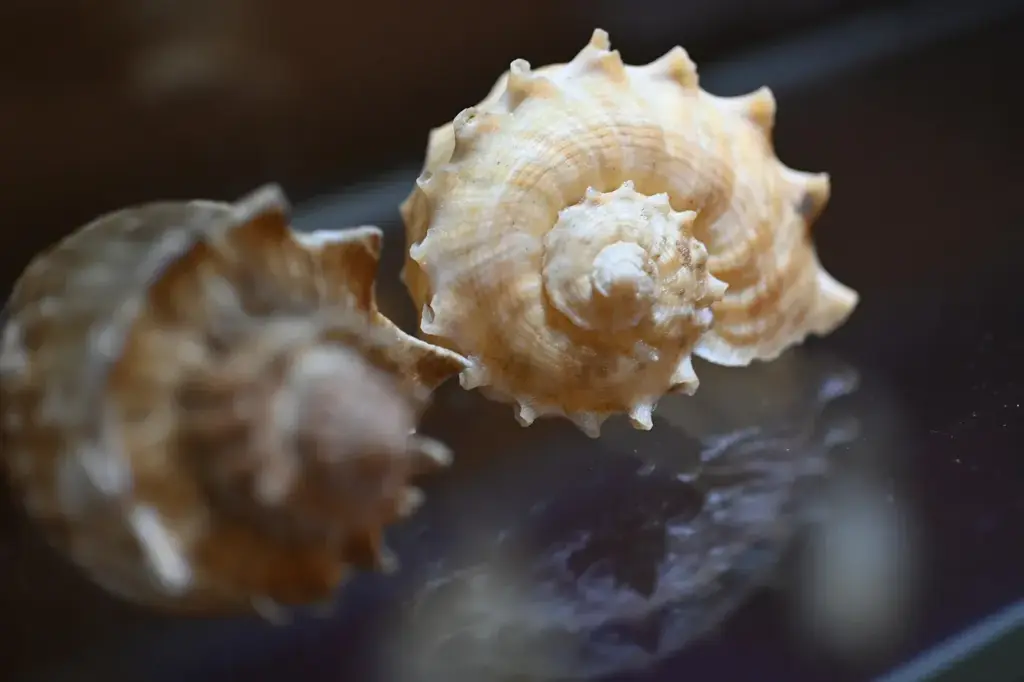
The golden ratio is a proportion of about 1 to 1.618, written with the Greek letter phi. In photography it becomes a phi grid or a spiral overlay that guides where to place the subject. The lines fall slightly closer to the center than the rule of thirds, and the spiral leads the eye toward one corner of the frame.
Why It Matters
Many photographers look for a layout that feels natural without thinking about it. The golden ratio is one of the oldest answers, used in art, architecture and design. Having it as another tool gives you a second way to arrange a scene when the rule of thirds feels too rigid or too ordinary.
It also helps to know the limits. The claim that this ratio makes any picture beautiful is stronger than the evidence, so using it well means treating it as a guide to flow and balance, not as a guarantee.
Beginner Using The Golden Ratio Phi Grid And Spiral
The golden ratio describes a split of a line in which the whole is to the longer part as the longer part is to the shorter part. That works out to roughly 1.618 to 1, or about 61.8 percent to 38.2 percent. Applied to a photo, this means the grid lines sit at about 38 percent and 62 percent across the frame instead of at 33 and 67 percent.
The Two Overlays
- Phi grid: Similar to the thirds grid, but the middle column and row are narrower. The lines are closer together, so subjects end up a little nearer the middle.
- Golden spiral: A curve that winds inward through a series of nested rectangles whose sides follow the Fibonacci sequence (1, 1, 2, 3, 5, 8, 13 and so on). The tightest part of the spiral is where you place the key detail, such as an eye.
Most photo editors offer both as crop overlays, and some cameras offer a grid you can turn on during shooting. In editing programs, press the overlay key while the crop tool is active to cycle through the options and rotate the spiral.
How To Try It In Practice
- Pick the main subject or the feature that deserves the most attention.
- Compose loosely so that there is extra space around the scene, then adjust the final crop on a computer.
- Open the crop tool, choose the golden spiral overlay and drag until the center of the curve sits on the key detail.
- Rotate or flip the overlay so the wide, open part of the spiral lines up with the area where the scene flows, such as a path, a river or a wave.
- Check that no distracting object touches the edge, then accept the crop.
| Feature | Rule of thirds | Golden ratio |
|---|---|---|
| Line positions | 33 and 67 percent | About 38 and 62 percent |
| Middle area | Equal to the others | Narrower |
| Overlay options | Grid only | Grid or spiral |
| Best for | Quick, simple layouts | Flowing scenes with curves |
Common Mistakes
- Forcing every picture into a spiral even when it has no curving flow for the spiral to follow.
- Choosing the wrong orientation, so the open end of the spiral points toward the nearest edge instead of into the picture.
- Cropping too hard to match the overlay, losing resolution and context.
- Believing the overlay can rescue a photo with a weak subject.
Handy for this: Wide-Angle Zoom Lens — take in the whole scene. (affiliate link)
Advanced Proportion Math, Orientation And Honest Limits
Where The Number Comes From
Phi equals (1 + the square root of 5) divided by 2, about 1.6180339. A golden rectangle is one whose long side divided by its short side is phi. If you cut a square off a golden rectangle, what is left is another golden rectangle, and repeating the cut forever creates the pattern from which the spiral is drawn. Ratios of consecutive Fibonacci numbers, such as 8 to 5 or 13 to 8, approach phi, which is why the spiral is often drawn with quarter-circle arcs through Fibonacci-sized squares. The arcs are an approximation of a true golden spiral.
Aspect Ratio Matters
A 3:2 frame has a ratio of 1.5 and a 16:9 frame has 1.78, so neither is exactly golden. A 1.618 frame is close to 16:10 screens. If you crop to the golden rectangle, a 3:2 image loses a small strip on the long side, and the spiral fits cleanly. Otherwise overlays are stretched to the frame, and the geometry is only approximate, which is usually fine for composition. See aspect ratios before you commit to a crop.
Orientation And Flow
The spiral has a direction, and the eye tends to follow it from the wide outer sweep to the tight center. Match that to the scene. A curving shoreline or a staircase that winds toward the subject suits a spiral that tightens in the same direction. If the structure of the scene runs the other way, flip the overlay horizontally or vertically, or rotate it ninety degrees. A similar logic applies to leading lines, which pull the eye along a path toward the focus.
Honest Limits Of The Claim
Careful tests of preference have not shown that people consistently choose golden rectangles over other similar shapes, and many examples cited as golden in nature or art are loose fits found after the fact. The practical benefit is more modest. The grid and spiral give you reliable structure, a close cousin of the rule of thirds, and the spiral encourages you to think about flow and about moving the eye through the frame. Use it as one of several tools, then trust your eye.
Try It
- Open a photo you already like in an editor and apply the golden spiral crop overlay.
- Cycle through the orientations and note which gives the best flow toward the subject.
- Compare the spiral crop with a thirds crop of the same image and decide which feels more natural.
- On your next outing, find a scene with a curving path, a wave or a staircase and shoot it loosely, then finish the crop with the spiral.
Common Questions
Is the golden ratio better than the rule of thirds?
Neither is better in every case. The phi grid puts lines a little closer to the center. Try both on the same photo and choose the layout that gives the cleaner flow.
Does my camera have a golden ratio grid?
Most cameras show only a thirds or square grid in the viewfinder. The phi grid and spiral are usually crop overlays in editing software, so compose a little wide and finish the framing there.
What is the Fibonacci spiral?
It is a curve built from quarter-circle arcs drawn through squares sized by Fibonacci numbers. It approximates the golden spiral and is used as a guide for placing a focal point at its tight center.
Is it true that the golden ratio makes photos beautiful?
The claim is overstated. Tests show people do not reliably prefer golden proportions, so use the ratio as a framework for balance and flow, not as a rule that guarantees a good image.
Related Lessons
- Rule of Thirds to learn the simpler grid first.
- Leading Lines to make the path that a spiral follows.
- Aspect Ratios to see how frame shape changes the overlay.
- Visual Flow to guide the eye through the whole frame.
- S-Curve Composition to use natural curves in a similar way.
Gear That Helps With This
Hand-picked kit that makes this lesson easier to put into practice.
Some links are affiliate links: if you buy through them we may earn a small commission at no extra cost to you. How this works.