
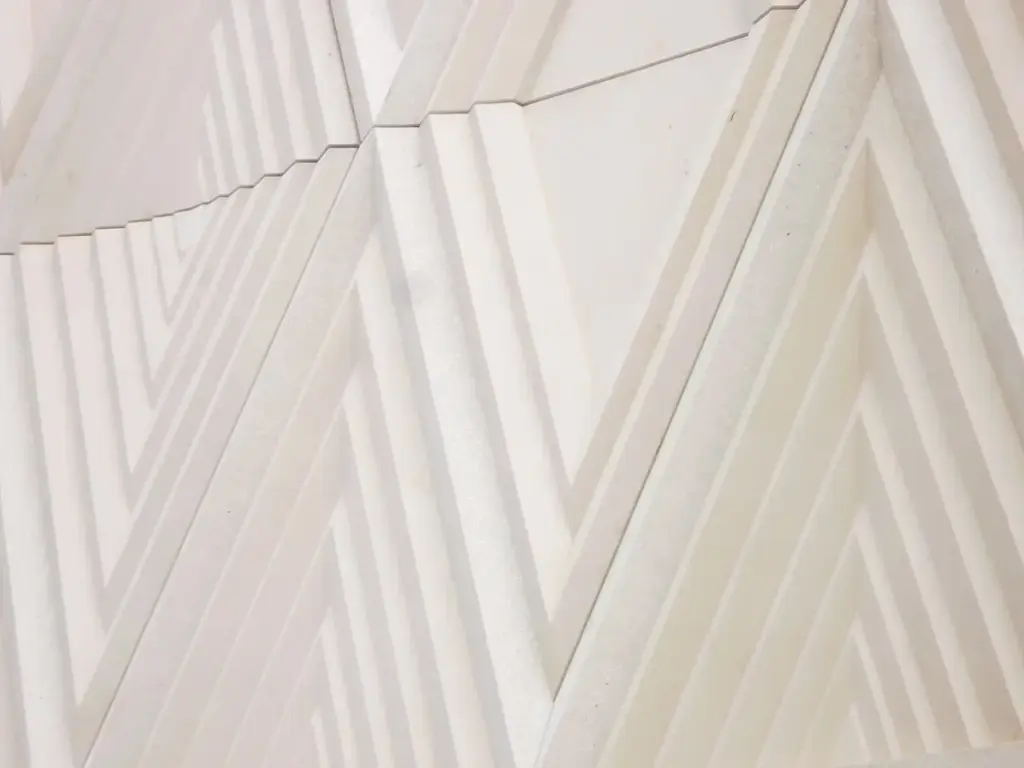
Diagonal composition is the use of slanted lines, edges and triangular shapes to add energy, depth and direction to a photograph. Because diagonals suggest movement and lead the eye across the frame, they make images feel more dynamic than horizontal or vertical lines, which tend to feel calm and stable.
Why It Matters
A frame built only from horizontals and verticals can feel static. Diagonals break that stillness. They imply motion, create depth by pointing into the distance and guide the viewer’s eye from one part of the picture to another.
They also give you a way to organize a busy scene. Instead of scattering elements, you can line them along a diagonal or fit them into a triangle, and the picture suddenly has structure.
Beginner Finding And Using Diagonals
Where Diagonals Appear
Diagonals are everywhere once you look. Staircases, rooflines, bridges, railings, roads, shadows, tree branches, shorelines and a person leaning all create them. Even a horizon tilted on purpose becomes a diagonal.
How They Work
– Diagonals lead the eye, as in leading lines. The viewer follows the slant to the subject.
– They add depth when they converge toward a point in the distance.
– They add energy. A steeper line feels more urgent than a gentle one.
– They divide the frame into triangles, which feel stable but lively.
Simple Ways To Create Them
1. Change your position so lines in the scene slant across the frame.
2. Tilt the camera slightly. Use this carefully, since a tilted horizon can feel like a mistake.
3. Use a wide lens up close so lines converge.
4. Ask a subject to lean or step diagonally.
Placing The Subject
Place the subject where the diagonal ends or crosses a strong point. A subject at the lower left with a line rising to the upper right gives balance. Leave space in the direction of movement so the subject is not pushed out of the frame.
Common Mistakes
– Tilting a horizon by a small amount so it looks like a crooked photo.
– Using a diagonal that leads out of the frame and away from the subject.
– Filling the frame with so many diagonals that the image feels chaotic.
– Ignoring the direction. A line from upper left to lower right reads differently from the reverse.
Handy for this: Wide-Angle Zoom Lens — take in the whole scene. (affiliate link)
Advanced Triangles, Direction And Balance In Diagonal Composition
Triangles
Three points create a triangle, and the eye connects them. A group of three people, three objects or a subject with two supporting elements forms an implied triangle. A pyramid shape is stable, an inverted triangle feels tense, and overlapping triangles add rhythm. In portraits, a head and two hands form a triangle that holds the picture together, as discussed in posing portraits.
Reading Direction
Western viewers usually read from left to right, so a diagonal rising from lower left to upper right feels like moving upward and forward, while one falling from upper left to lower right feels like descending or relaxing. Neither is wrong. Choose by mood, and test by flipping the image horizontally to see how it changes.
Diagonals And The Rule Of Thirds
Diagonals work well with the rule of thirds. Place the subject on a power point and let a line run through or toward it. Another approach is the diagonal method: imagine a line from corner to corner, then place key elements along it. Both give structure without rigid rules.
Combining With Curves
A straight diagonal is strong but can feel hard. Combine it with curves, such as a winding path, for softer movement, as covered in S-curve composition. A road that moves diagonally and curves gives both direction and flow.
Wide Lenses And Perspective
Wide-angle lenses stretch perspective, so lines converge strongly and diagonals become dramatic. Get close to a foreground object and let lines run away from it. See wide-angle lenses for how distance and angle affect shapes. In architecture, tilting the camera upward makes verticals lean, which can add drama or look like an error, so decide on purpose.
Camera Angle
Low angles make structures rise diagonally, while high angles let you see paths and shadows cutting across the ground. See camera angle photography for ideas. In cities, look for stairs, bridges and building edges, as in cityscape photography.
Breaking The Pattern
A diagonal that cuts against an otherwise orderly scene attracts attention. Use a single strong diagonal, such as a shadow across a wall, to create a focal point, and see breaking composition rules for when to ignore guidance altogether.
Diagonals In Portrait And Street Photography
In portraits, a leaning pose or shoulders at an angle forms a diagonal line from head to hip. In street photography, steps, crosswalk stripes and moving people produce diagonals in an instant. Anticipate where a figure will cross a diagonal and wait for the moment.
Editing And Cropping
You can strengthen diagonals in editing. Crop so a line enters from a corner, straighten the picture to a pleasing angle, or rotate slightly. Check that the crop does not cut the diagonal awkwardly. Use a grid overlay in the crop tool to align angles to the corners, and compare a few crops side by side.
Video And Moving Subjects
Diagonal movement across the frame feels dynamic in video. A subject walking toward the camera on a diagonal path shows more depth than one walking straight across. Position the camera to catch lines, and use a gimbal move that follows a diagonal.
Practice Idea
Spend an hour in a park or building looking only for diagonals and triangles. Take one frame of each pattern, then review them and identify which gave the most energy and which felt unstable.
Try It
- Find a staircase, fence or road and photograph it straight on, then from an angle that makes its lines slant.
- Place a person or object along the diagonal and take another frame.
- Flip each image horizontally and compare how the mood changes.
- Crop one image so the diagonal starts in a corner and compare it with the original.
Common Questions
What is diagonal composition in photography?
It is the use of slanted lines or implied lines to add movement, depth and visual direction to an image, instead of relying only on horizontals and verticals.
How do I add diagonals to my photos?
Change position or angle so lines slant across the frame, use a wide lens close to foreground objects, or ask a subject to lean or move diagonally.
Are triangles part of diagonal composition?
Yes. Diagonals divide the frame into triangular shapes, and groups of three elements form implied triangles that give stability with energy.
Does the direction of a diagonal matter?
It can. A line rising to the right feels like upward movement, while one falling to the right feels calmer or like descent. Test both and choose the mood you want.
Related Lessons
- Leading Lines for guiding the viewer along a path.
- Rule Of Thirds Composition to place subjects along diagonals.
- S-Curve Composition to soften diagonals with curves.
- Wide-Angle Lenses to exaggerate converging lines.
- Breaking Composition Rules for using diagonals on purpose.
Gear That Helps With This
Hand-picked kit that makes this lesson easier to put into practice.
Some links are affiliate links: if you buy through them we may earn a small commission at no extra cost to you. How this works.