
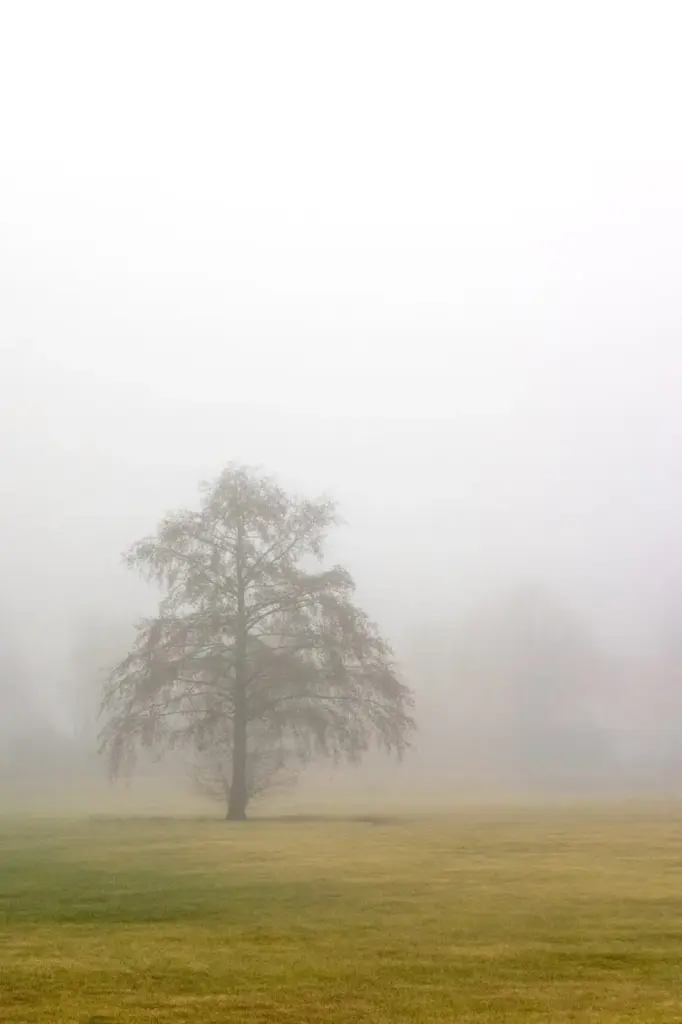
Minimalist photography is the practice of building an image from very few elements, usually one clear subject, plenty of empty space and simple shapes or colors. You remove anything that does not support the idea, so the viewer sees the subject immediately and feels the calm around it.
Why It Matters
Most weak photographs are not weak because of what they lack, but because of what they contain. Extra objects, busy backgrounds and competing colors pull the eye in several directions.
Minimalism trains you to decide what the picture is about before you press the shutter. That habit improves every other kind of photography you do, from portraits to travel.
Beginner Getting Started With Minimalist Photography
Minimal does not mean empty or boring. It means every element earns its place. A single red door on a white wall, a lone bird on a wire, or a small figure on a wide beach all work because nothing else competes with the subject.
Look For Simple Backgrounds
- Clear sky, fog, snow and still water give natural empty space.
- Plain walls, closed doors and blank facades work well in towns.
- Out-of-focus backgrounds at wide apertures can erase clutter around a portrait or object.
- Early morning and dusk reduce harsh detail and soften colors.
A Simple Process
- Decide the one thing the picture is about.
- Walk around it and look for an angle with the cleanest background.
- Move closer or use a longer focal length to cut out stray objects.
- Place the subject off center, often near a third line, and leave space on one side.
- Check the edges of the frame for anything that distracts, then take the shot.
Elements That Work Well
| Element | How It Helps |
|---|---|
| Negative space | Gives the subject room and sets the mood |
| Single color or limited palette | Keeps attention on shape and tone |
| Strong line or shape | Creates structure with no extra objects |
| Small subject in a big scene | Conveys scale, solitude or quiet |
Common Mistakes
- Leaving a small distraction at the frame edge, such as a pole or sign.
- Centering everything every time, which can feel static unless symmetry is the point.
- Making the subject so small and low in contrast that it disappears.
- Over-editing. Heavy contrast and saturation fight the calm you worked to build.
Famous Minimal Subjects To Practice On
- A single tree in a field or on a hill.
- A lone boat or buoy on calm water.
- A person walking through a wide, empty square.
- A shadow cast across a plain wall.
- One flower or leaf against a clean surface.
These subjects are common because they give an easy starting point. Once you can make them work, try finding minimal views in busy places, such as one lit window in a dark building or a single colored umbrella in a crowd seen from above.
Where To Look Indoors
Minimalism does not need a landscape. A stairwell, a lamp against a white ceiling, or the corner of a room with window light can all give clean geometry. Turn off extra lights, move objects out of the frame and use side light to give simple surfaces depth.
Handy for this: Carbon Fiber Tripod — sharp at slow shutter speeds. (affiliate link)
Advanced Space, Tone And Intent
Negative Space Is A Shape
Empty areas have weight. A subject placed in the corner of a large field feels isolated, while the same subject centered with equal space feels still. Treat the empty area as a shape you are composing. The lessons on negative space and visual weight and balance explain how to judge it.
Control Tone And Color
Minimal images rely on tone relationships. A pale subject on a pale background needs careful exposure so detail does not vanish; read the histogram and consider adding exposure compensation for bright scenes such as snow or mist. A restrained palette, perhaps one dominant color and one accent, keeps the picture quiet. See warm and cool contrast for how a small accent can anchor a scene.
Long Exposure As A Tool
Long exposures simplify movement. Smoothing water into mist or clouds into streaks removes texture and leaves clean planes. Use a tripod and neutral density filter, and compare with the ideas in long exposure clouds.
Aspect Ratio And Crop
The shape of the frame changes how space feels. A wide panoramic crop exaggerates horizontal calm, while a square suits centered or symmetrical subjects. Crop in editing to remove edge distractions, but try to compose carefully in camera so the cropped result is still sharp and well resolved.
Editing For Restraint
- Use gentle local adjustments to darken or clone out small distractions.
- Lower texture and clarity slightly in large empty areas to keep them smooth.
- Keep noise controlled in smooth skies, where grain shows most.
- Compare the finished image with a small thumbnail. A good minimalist picture still reads at stamp size.
Over time, develop a personal reason for each picture. Minimalism works best when it expresses an idea, such as isolation, patience or order, rather than being a style applied to anything.
Weight, Tension And Balance
A minimal frame still has tension. A small dark subject low in a pale frame feels grounded, while the same subject near the top can feel as if it is floating or falling. Think about where the eye enters, where it rests and where it exits. Diagonal lines or a path leading toward the subject can guide the eye without adding more objects, and diagonal composition explains how.
Series And Consistency
Minimalist photographs are often stronger as a set. A consistent palette, aspect ratio and amount of empty space let different subjects feel related. Photograph one theme such as horizons, doorways or reflections over several weeks and edit them with matching tone, so the group reads as one body of work.
Try It
- Choose a place with plain backgrounds, such as a beach, a quiet street or a blank wall.
- Take five photographs of one subject, changing only the position of the subject in the frame.
- Review them and pick the one where the empty space feels best balanced.
- Edit it with only exposure, contrast and one color adjustment.
Common Questions
Is minimalist photography just a lot of white space?
No. Space is one tool, but minimal pictures can also be dark, colorful or full of texture, as long as few elements compete for attention.
What camera settings suit minimalist photography?
Use a wide aperture to blur backgrounds or a small aperture to keep a simple scene sharp. Use exposure compensation in bright scenes so white areas do not turn gray.
Can I take minimalist photos with a phone?
Yes. A phone is good for this style because you can move quickly and see the frame clearly. Tap to set exposure on the subject and avoid digital zoom.
How do I stop minimal images looking empty?
Give the viewer a clear reason to look, such as a strong shape, interesting light or a small human element, so the empty space feels deliberate.
Related Lessons
- Negative Space for how empty areas shape a photograph.
- Rule Of Thirds Composition to place a small subject well.
- Fill The Frame for the opposite approach to simplifying.
- Visual Weight And Balance to judge how elements pull the eye.
- Subject Isolation for ways to separate a subject from its background.
Gear That Helps With This
Hand-picked kit that makes this lesson easier to put into practice.
Some links are affiliate links: if you buy through them we may earn a small commission at no extra cost to you. How this works.