
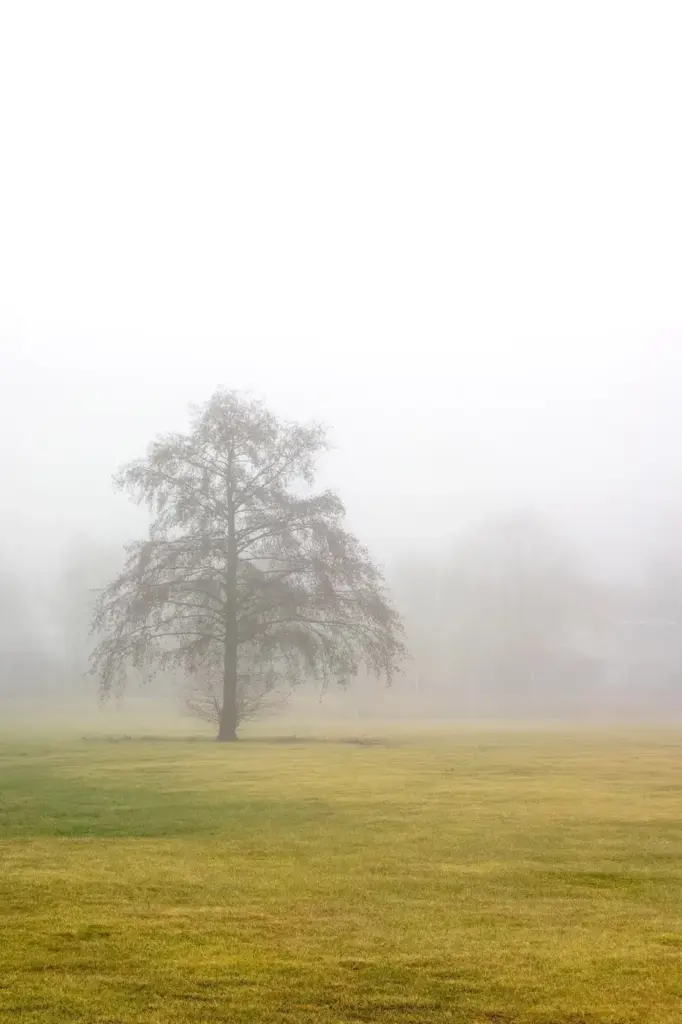
Negative space is the empty or quiet area around the main subject of a photo, such as open sky, a plain wall, calm water or fog. It gives the subject room to stand out, simplifies the frame, and sets a mood such as calm, solitude or scale. The subject is the positive space, and the rest supports it.
Why It Matters
Beginners often try to fill every part of the frame, afraid that empty areas are wasted. In practice the opposite is often true. A small subject in a large quiet area gets more attention than the same subject in a busy scene, because there is nothing competing with it.
Negative space also does emotional work. Wide emptiness can feel peaceful or lonely, depending on the subject and light. Learning to plan it deliberately turns accidental emptiness into a strong choice.
Beginner Using Negative Space In Your Photos
Negative space is not the same as blank space. It is a part of the design that has a purpose. The shape of the empty area matters as much as the shape of the subject, and a good photo treats them as a pair.
Where To Find It
- Sky: a bird, kite or plane against a clear or softly clouded sky.
- Water and snow: a boat on a flat sea, a lone hiker on a snowfield.
- Walls and floors: a person walking past a plain wall, a shadow on pavement.
- Fog and mist: a tree or building fading into white.
- Blur: a wide aperture that turns the background into a smooth wash of color.
Steps To Compose It
- Pick one subject and decide what the picture is about.
- Look for a background that is plain or low in detail. If it is busy, move until a sky, wall or a blur gives you a quiet area.
- Step back or zoom out so the subject is smaller in the frame, or choose an angle that points toward the sky.
- Place the subject off center using the rule of thirds so that the empty area is larger on one side.
- Leave the extra space in the direction the subject faces or moves.
- Check the corners for stray objects, which stand out against empty space.
Exposure Tips
- Bright skies, snow and fog can fool the meter into making the picture too dark, so add positive exposure compensation, such as plus 1 stop, and check the histogram.
- Dark walls or night skies can fool it the other way, so use negative compensation if the shadows look gray.
- Keep the ISO low in empty areas, since noise is easy to see in smooth tones.
| Mood | Typical negative space | Subject size |
|---|---|---|
| Calm, peaceful | Smooth water, pale sky | Small to medium |
| Lonely, isolated | Large empty field or street | Very small |
| Modern, clean | Plain wall, white background | Medium, sharp edges |
| Dreamy, soft | Fog, heavy blur | Medium, partly faded |
Common Mistakes
- Leaving emptiness with no clear subject, so the picture seems unfinished.
- Placing the subject so close to the edge that it looks cramped, with space on the wrong side.
- Using a dirty sky or a wall with a stain or a power line, which draws the eye.
- Forgetting to check the edges and corners.
Handy for this: Carbon Fiber Tripod — sharp at slow shutter speeds. (affiliate link)
Advanced Balance, Scale And Negative Space In Minimal Scenes
Weight Of Empty Areas
Empty space has visual weight, but it is light. A small, dark, sharp subject can balance a large pale area, much as a small weight on a long lever balances a large one. When you place a subject near one edge, the empty area on the other side balances it. If the subject is too light or too small for the area, the image feels weak, and if it is too heavy it feels crowded. See visual weight and balance for the factors that change the weighting.
Shaping The Empty Area
The empty area is a shape. A tall sliver beside a subject feels tense, a wide band feels calm, and a roughly square area feels stable. Use the crop and camera position to adjust that shape. Cropping from the top increases a ground-heavy look, and cropping from the bottom increases sky. Aspect ratio also matters, as in aspect ratios, because a wide frame makes space feel horizontal and a tall one makes it feel vertical.
Using Depth Of Field And Shutter Speed
Negative space can be made, not only found. A wide aperture such as f/1.8 on a portrait lens blurs a cluttered background into smooth color, as explained in subject isolation. A long exposure can turn moving water or clouds into smooth tone, as in long exposure photography. In both cases the technique removes detail from the background so the subject stands out.
Lead Room And Direction
The space in front of a subject that is looking or moving is often called lead room. Placing the empty area in that direction gives the subject somewhere to go. Putting it behind the subject can create a feeling of tension or of having left something behind, which is a legitimate choice when you want that mood.
Negative Space In Editing And Printing
Empty areas are easy to use for text, such as titles on a magazine cover or a poster, and designers often ask for them. Cropping to keep a clean area is a good habit if the photo may be used that way. In editing, take care with gradients, because smooth skies reveal banding if they are pushed too far, and a slight grain can hide it. Clean dust spots as they are easy to see on plain backgrounds.
When Less Space Is Better
Not every subject benefits. Action, crowds and details often need to fill the frame, an approach covered in fill the frame. The choice between the two depends on whether the story is the subject or its setting.
Try It
- Go outside and find a plain sky, wall or stretch of water, and place a small subject in one third of the frame.
- Shoot the same subject larger in the frame, then smaller, and compare how the mood changes.
- Check the histogram for each and use exposure compensation if the empty area looks gray.
- Print or view the images at the same size and pick the one in which the subject has the most room to breathe.
Common Questions
What is negative space in photography?
It is the empty or low-detail area around the subject, such as sky, water, a wall or a blurred background. It gives the subject room to stand out and sets the mood.
Is negative space the same as empty space?
Not quite. Negative space is empty space used on purpose. It has a shape and a job, which is to support the subject, add mood or create balance.
Why do my snowy or foggy photos look gray?
The meter tries to make bright areas average gray. Add positive exposure compensation, around plus 1 stop, and check the histogram so the snow stays white.
How much negative space should I leave?
There is no fixed amount. Start with the larger share of the frame on the side the subject faces, then adjust until the subject feels supported but not lost.
Related Lessons
- Subject Isolation to make quiet backgrounds with focus and light.
- Minimalist Photography to take simplicity further.
- Lead Room to place empty space where the subject is heading.
- Fill the Frame to know when less empty space is the better choice.
- Exposure Compensation Guide to keep bright and dark areas true.
Gear That Helps With This
Hand-picked kit that makes this lesson easier to put into practice.
Some links are affiliate links: if you buy through them we may earn a small commission at no extra cost to you. How this works.