
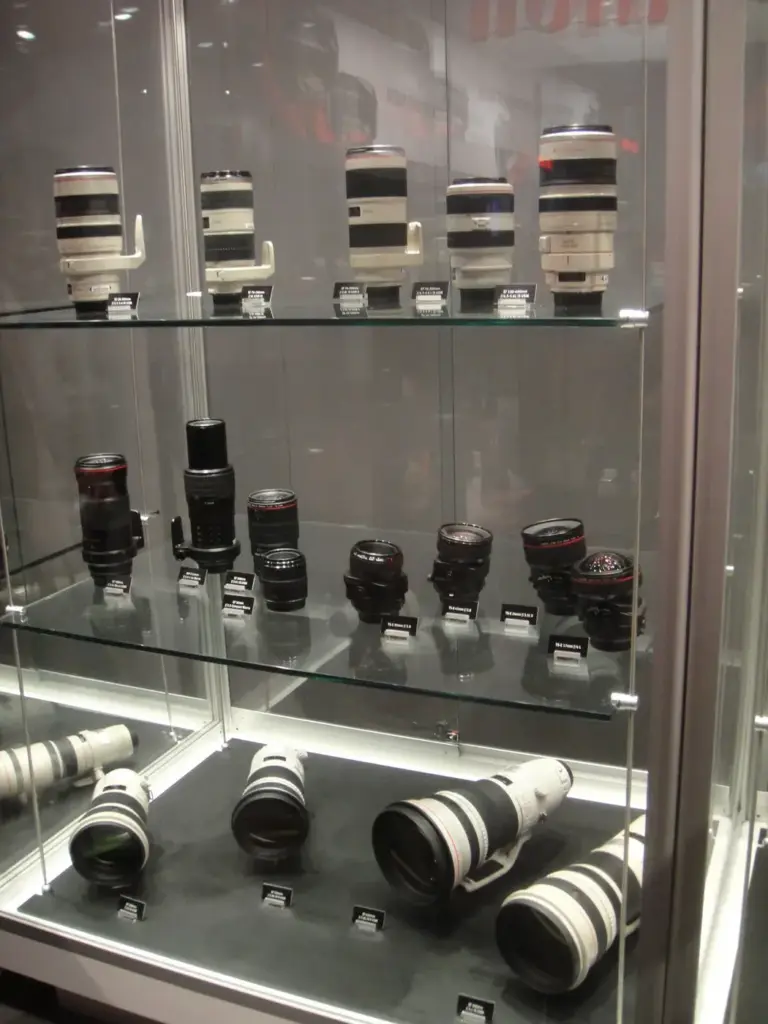
A prime lens has one fixed focal length, such as 35mm or 85mm, while a zoom lens covers a range, such as 24-70mm. Prime vs zoom is a trade-off: primes are usually smaller, lighter, sharper for the price and have wider apertures, and zooms offer flexibility so you can reframe without moving your feet.
Why It Matters
Picking between a prime and a zoom affects what you carry, how you shoot and how much money you spend. Neither type is better in every situation. Each solves a different problem.
Knowing the trade-offs helps you buy the first lens you actually need, rather than the one that looks best on a spec sheet.
Beginner How Primes And Zooms Differ
What A Prime Offers
- Wide maximum apertures such as f/1.4 or f/1.8, which let in more light and give shallower depth of field.
- Smaller, lighter bodies that are easier to carry all day.
- Simpler optical designs, which often give sharp images at lower cost.
- Fewer choices, which can make you move more and think about composition.
What A Zoom Offers
- Flexibility to change framing instantly without changing lenses.
- One lens that replaces several primes, which is handy for travel, events and sports.
- Useful for subjects you cannot approach or that move toward and away from you.
- Larger and heavier, and usually with smaller or variable maximum apertures unless you pay more.
Side By Side
| Feature | Prime | Zoom |
|---|---|---|
| Focal length | Fixed | Variable range |
| Typical maximum aperture | f/1.2 to f/2 | f/2.8 to f/6.3 |
| Size and weight | Smaller, lighter | Larger, heavier |
| Low light | Excellent | Fair to good |
| Flexibility | Move your feet | Zoom the ring |
| Price for equal quality | Often lower | Often higher |
How To Choose
- List what you shoot most. Portraits and street work suit primes, while weddings, travel and sports favor zooms.
- Decide how much light you work in. Dim rooms and night shots favor a fast prime.
- Consider weight. A day of walking is more pleasant with a small prime.
- Start with one of each if you can: a standard zoom and one affordable 35mm or 50mm prime.
Common Mistakes
- Assuming primes always beat zooms in sharpness. Modern high-end zooms can match many primes.
- Buying a prime and never moving, so the framing never improves.
- Buying a zoom with a slow aperture and then struggling in dim light.
- Carrying a bag of lenses and missing shots while changing them.
A Few Budget Pointers
A 50mm f/1.8 or 35mm f/1.8 prime is often the cheapest way to get a wide aperture and a clear step up in low light and background blur from a kit zoom. A good used standard zoom can give more flexibility than a new budget lens. Buy used from sellers who offer returns, and check the front and rear glass for scratches, haze and fungus. Test focus and zoom ring smoothness before the return window ends.
Handy for this: Fast Prime Lens — creamy backgrounds, low light. (affiliate link)
Advanced Optical Design, Aperture And Real Trade-Offs
Optical Complexity
A zoom must hold focus and keep aberrations low across a range of focal lengths, which needs more glass elements and moving groups. A prime only has to be corrected for one focal length. More elements can also mean more internal reflections, though modern coatings reduce this. For details, see lens coatings and lens aberrations. Highly corrected zooms use aspherical and low-dispersion elements to close the gap.
Aperture And Light Gathering
The maximum aperture of a lens is its focal length divided by the diameter of the entrance opening. A 50mm f/1.4 lens has an opening of about 36mm. A 24-70mm f/2.8 must hold that same ratio across a range, so its front element becomes much larger, which explains its weight. Variable aperture zooms avoid the weight by letting the maximum aperture shrink toward the long end, such as f/3.5 at 18mm and f/5.6 at 55mm. Learn more in variable aperture zoom lenses and fast lenses.
Depth Of Field And Background Blur
A wider aperture gives a thinner plane of focus and larger out-of-focus areas, which is why primes are popular for portraits. A 85mm f/1.4 at 6 feet gives a much softer background than a zoom set to 85mm at f/4. Equal framing and the same aperture produce a similar look no matter which lens type you use, so the real advantage of a prime is access to apertures zooms rarely reach. See bokeh explained.
Focus Breathing, Handling And Reliability
Many zooms change their field of view slightly as focus moves, an effect called focus breathing, and some zooms extend or shift focus when zooming. Primes tend to be steadier, which matters for video. Zooms have more moving parts and seals, so they may wear or collect dust sooner. Weather-sealed professional zooms are built to handle this, but they cost more.
A Practical Kit Plan
Many photographers build around one standard zoom, often 24-70mm or a similar range, then add a fast prime for low light and a longer lens for distance. See building a first lens kit to make this plan fit your budget.
Choosing For Video
Video shooters need smooth zooms, quiet focus motors and low focus breathing. Cine lenses are built for this, but photo lenses vary a lot. Primes usually breathe less and open wider, so they suit shallow depth of field and low light. Zooms are convenient for run-and-gun work, and constant aperture zooms keep exposure steady while you change framing. Stabilization inside the lens or body helps handheld work with either type.
Try It
- Choose a subject at a fixed distance, and photograph it with a zoom at 50mm and f/4.
- Switch to a 50mm prime at f/1.8 if you have one, or use your widest aperture if not, and shoot the same subject.
- Compare background blur, sharpness at the edges and how easy each lens was to handle.
- Write down which shots you missed because of lens swaps or slow apertures, and use the notes to guide your next purchase.
Common Questions
Are prime lenses sharper than zooms?
Often at the same price, yes, because a prime has a simpler design. But high-end zooms can match many primes, so check measured results for the specific lens rather than assuming.
Which is better for beginners, prime or zoom?
A kit zoom is usually the best first lens because it lets you learn what focal lengths you like. An affordable 50mm f/1.8 prime is a good second lens for low light and portraits.
Do primes make you a better photographer?
They can encourage you to think about position and composition because you cannot zoom. That is a useful habit, but good photographers use both types depending on the job.
Why are f/2.8 zooms so heavy?
To keep the f/2.8 aperture across the zoom range, the lens needs a large front element and more glass. That makes it bigger, heavier and more expensive than a variable aperture zoom.
Related Lessons
- Focal Length Explained to understand what the numbers on each lens mean.
- Fast Lenses for when a wide maximum aperture is worth paying for.
- The 50mm Lens for a classic first prime.
- Variable Aperture Zoom to see how zoom aperture changes with focal length.
- First Lens Kit for a plan to build your lenses over time.
Gear That Helps With This
Hand-picked kit that makes this lesson easier to put into practice.
Some links are affiliate links: if you buy through them we may earn a small commission at no extra cost to you. How this works.