
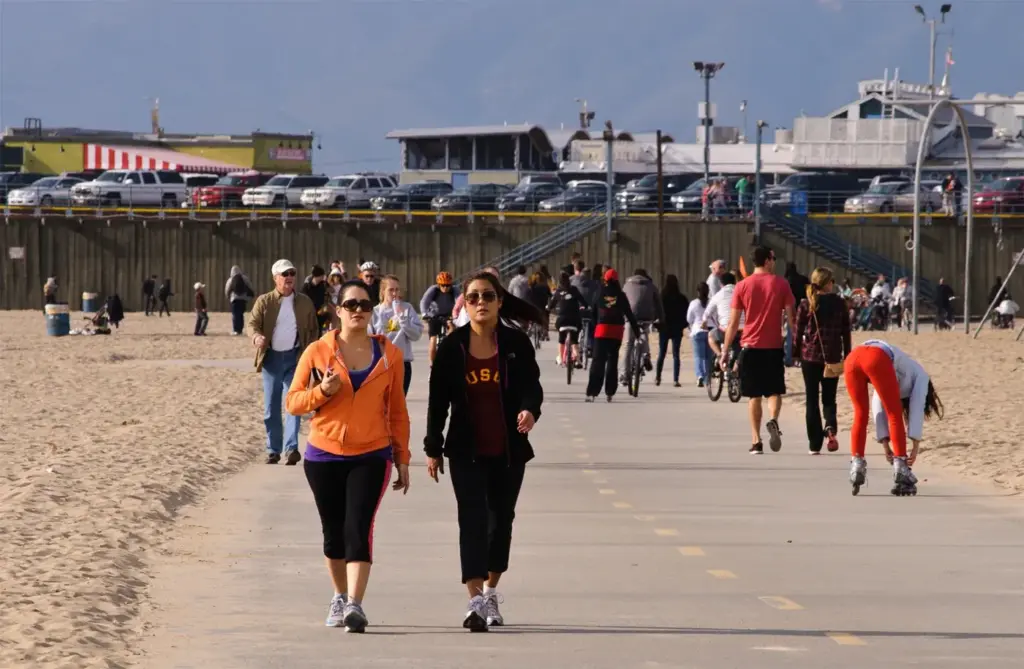
Telephoto compression is the look in which a long lens makes objects at different distances seem closer together and closer in size. The lens itself does not squeeze space. The effect comes from standing far from the subject, and a long lens simply lets you fill the frame from that distance.
Why It Matters
Telephoto compression is one of the most repeated and most misunderstood ideas in photography. People say a long lens flattens the scene, but the real cause is camera position.
Understanding this lets you choose lens and distance on purpose, either to make a mountain loom behind a town or to keep a portrait free of distracting depth.
Beginner What You Will See With A Long Lens
Photograph a row of lampposts that stand 30 feet apart. From close with a wide lens, the nearest looks huge and the last looks tiny. From far away with a long lens, they look similar in size and spaced tightly, as if stacked. That tight stacking is what people call compression.
How To Use It
- Make backgrounds look larger. A mountain, the moon or a skyline looks bigger behind a subject when you shoot from far away with a long lens.
- Simplify scenes. A long lens includes less of the background, so it is easier to hide clutter.
- Flatter faces. Portraits at 85mm to 135mm from a few feet away make features look balanced instead of exaggerated, which is why they are so popular.
- Pack layers. Hills, trees and buildings stacked in depth make interesting patterns in landscapes.
A Simple Test
- Choose a subject with a clear background, such as a person in front of a distant building.
- Take a photo from 6 feet away with a wide lens, such as 24mm.
- Back up to 24 feet and use a lens about four times longer, such as 100mm, so the person fills the same part of the frame.
- Compare how large the building appears behind the person in each photo.
Typical Focal Lengths
| Focal Length | Good For |
|---|---|
| 85 to 135mm | Portraits with gentle compression |
| 200mm | Sports, landscape layers, candid street scenes |
| 300 to 600mm | Wildlife, moon photos, distant subjects |
Common Mistakes
- Thinking that zooming in from the same spot changes the perspective. It only crops the picture.
- Choosing a long lens in a small space where you cannot step back.
- Ignoring haze and heat shimmer, which add softness at long distances.
- Using too slow a shutter speed, which blurs from magnified shake.
Subjects That Benefit
Compression helps most when you want stacking and layering: rows of hills in morning haze, a city skyline behind a bridge, or a runner with a stadium crowd filling the background. It also helps in nature work, where you can isolate a bird or animal against a smooth blurred backdrop without getting too close. When you want depth and distance, switch to a wider lens and move closer instead.
Handy for this: Telephoto Zoom Lens — reach distant subjects. (affiliate link)
Advanced Perspective Depends On Distance
The Geometry Of Telephoto Compression
The apparent size of an object on the sensor is proportional to its real size divided by its distance from the lens. If two objects are 10 feet and 40 feet away, the farther one appears one fourth the size of the nearer one. If you back up by 50 feet, they are now 60 and 90 feet away, and the farther one appears two thirds the size. The ratio of sizes moves toward one as distance increases. That is all compression is. It follows from where the camera is, whatever lens you use.
Why The Lens Gets The Blame
To make a subject the same size in the frame from a greater distance, you need a longer focal length. So long lenses and large distances nearly always come together. The long lens is the tool, but the distance is the cause. If you take a wide photo from the same spot and crop it to match a long lens view, the perspective is the same, only with fewer pixels. This ties into focal length explained.
Background Size And Blur
Because the background is enlarged relative to the subject, a long lens makes the background appear bigger, and the shallow depth of field blurs it into smooth shapes. Out-of-focus areas are larger for a given aperture because the same aperture diameter is bigger on a longer lens. See bokeh explained and controlling depth of field.
Atmosphere And Practical Limits
Shooting across long distances means light passes through more air, which adds haze, lowers contrast and, on hot days, causes heat shimmer that softens details. A telephoto also magnifies camera shake, so use a shutter speed of at least 1 divided by the focal length, a monopod or lens stabilization. A teleconverter extends reach but costs light and sometimes sharpness.
Choosing Distance Deliberately
Decide first how large you want the background to look, then choose the camera distance, and only then select the lens that frames the subject. Photographers who plan this way can change the feel of a portrait or a landscape without changing the subject at all. Compare with the opposite effect in wide-angle lenses.
Combining Compression With Blur
Long lenses and wide apertures together create strong subject separation, but the plane of focus becomes very thin. At 200mm and f/2.8 with a subject at 15 feet, only a few inches may be sharp. Use single-point autofocus on the eye, raise the shutter speed to stop motion and take several frames because small movements can shift focus. Stopping down to f/5.6 gives more margin while still blurring the background when it sits far behind the subject.
Try It
- Place a person or object in front of a distant building or tree line.
- Take one photo up close with a wide lens, and one far away with a long lens, framing the subject at the same size.
- Measure or estimate how large the background looks in each, and note how the spacing between near and far objects changes.
- Take one more photo at the long distance using the wide lens and crop it, and confirm that it matches the long lens view.
Common Questions
Does a telephoto lens really compress space?
No. The effect is caused by distance. A long lens just lets you stay far from the subject and still fill the frame, which makes background and subject look closer in size and depth.
Why are portraits shot with 85mm or 135mm lenses?
They allow a comfortable distance from the face, which gives balanced proportions without stretched features. They also show less background and can blur it with wide apertures.
Will cropping a wide photo give the same compression?
Yes, as long as you shot from the same position. Cropping changes how much of the view you keep, not the perspective. Resolution will be lower than a native long lens photo.
How can I make the moon look huge behind a subject?
Stand far from the subject and use a very long lens, such as 400mm or more, so the moon appears large relative to the subject. Plan the position with a sun and moon app.
Related Lessons
- Focal Length Explained for the basics of lens view and magnification.
- Wide-Angle Lenses to see the opposite perspective effect.
- Bokeh Explained for how long lenses render blur.
- Teleconverters to extend the reach of a lens you already own.
- Control Depth Of Field to manage how much of the scene is sharp.
Gear That Helps With This
Hand-picked kit that makes this lesson easier to put into practice.
Some links are affiliate links: if you buy through them we may earn a small commission at no extra cost to you. How this works.