
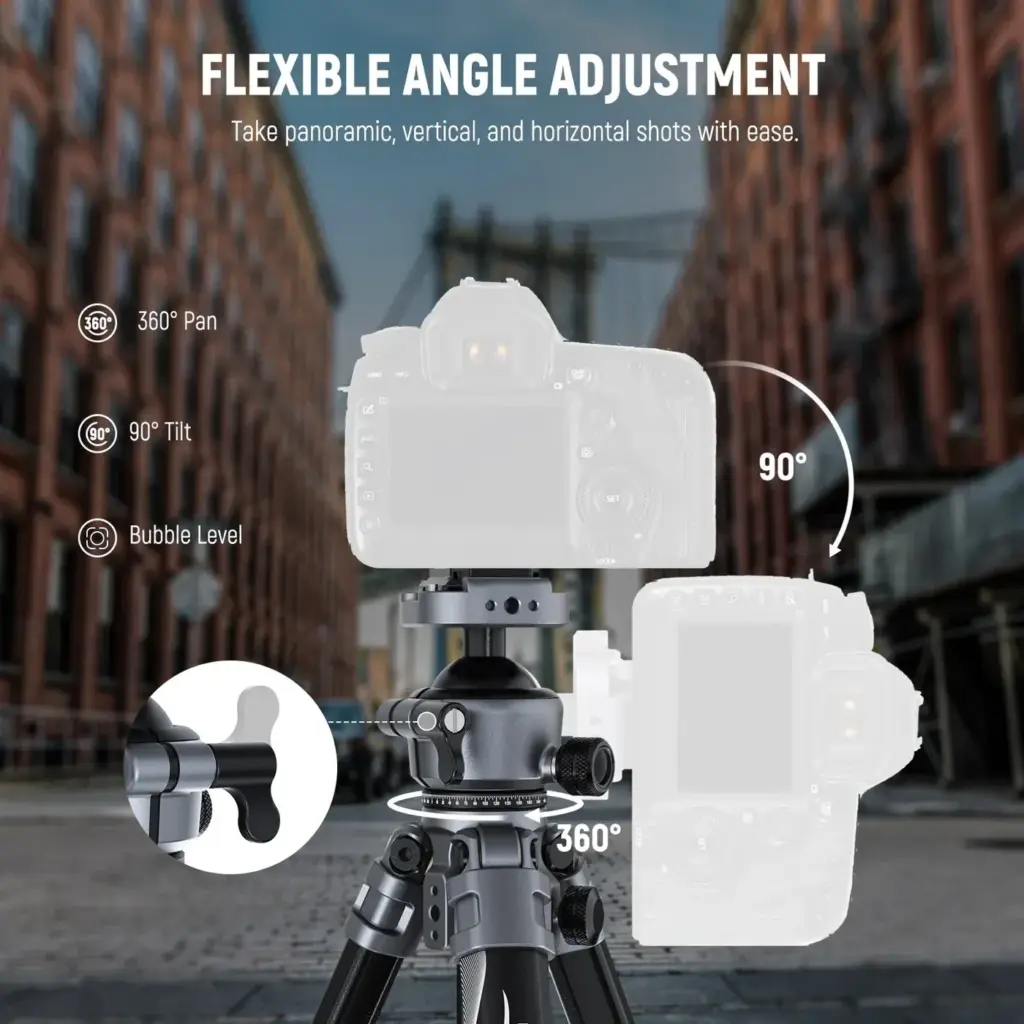
Tripod heads are the mechanisms that attach the camera to the tripod legs and let you aim and lock it. The main types are ball heads, pan-tilt heads, geared heads, fluid video heads and gimbal heads. Choose by the weight you carry, the precision you need and whether you shoot photos or video.
Why It Matters
A tripod is only as useful as its head. A poor head slips, droops or makes small adjustments frustrating, and a good one holds the camera firmly and moves smoothly when you want it to.
The right head also matches the kind of work you do. A head that is ideal for landscapes can be awkward for wildlife or video, so understanding the options helps you spend money well.
Beginner Tripod Heads For Beginners
Most legs have a threaded mount, usually 3/8 inch, with an adapter for 1/4 inch screws. Heads attach with a thread or a bolt, and the camera attaches to the head with a quick release plate.
The Main Types
| Head Type | Strengths | Weaknesses |
|---|---|---|
| Ball head | Fast, compact, moves in every direction with one knob | Hard to make tiny precise moves, can droop under heavy loads |
| Pan-tilt head | Separate controls for each axis, good for level horizons | Bulkier and slower to set up |
| Geared head | Very fine, precise adjustments with knobs | Heavy, expensive and slow |
| Fluid video head | Smooth pans and tilts with damping | Heavy and less useful for still photography |
| Gimbal head | Balances long lenses so they move freely | Specialized for telephoto lenses |
Choosing A Head
- Landscape and travel: a small ball head or a pan-tilt head.
- Studio and product: a geared head for precise framing.
- Video: a fluid head with counterbalance and a pan handle.
- Wildlife and sports: a gimbal head for long telephoto lenses.
- Macro: a geared head or a rail for fine focus positioning.
Load Rating
Every head has a maximum load rating. Pick one that supports at least twice the weight of your heaviest camera and lens combination. A head working at its limit will creep and droop. Weight ratings from different manufacturers are not always measured in the same way, so leave a generous margin.
Quick Release Plates
Plates should match your head system. Arca-style plates are common and work across many brands, and you can add an L bracket to switch between landscape and portrait orientation without losing your center. Make sure the plate is long enough to keep your camera and lens balanced, and tighten the screw firmly.
Common Mistakes
- Buying a head with a lower load rating than the gear needs.
- Over-tightening the knobs until the thread or the plate is damaged.
- Leaving the head loose and walking away with a camera attached.
- Choosing a ball head for long lenses with no counterbalance.
Test Before You Buy
If possible, test a head in a shop with your own camera and lens. Lock it, tilt it and see whether it holds. A few minutes of testing can save a refund later.
Handy for this: Carbon Fiber Tripod — sharp at slow shutter speeds. (affiliate link)
Advanced Mechanics, Compatibility And Field Technique
How Heads Hold A Load
A ball head clamps a sphere inside a socket. Tension controls set the friction, and a separate friction knob helps prevent a sudden fall when you loosen the main lock. A head with a good friction control lets you keep the camera in place while you adjust framing. Cheap heads often shift slightly as you lock them, called lock creep, which can ruin a precise composition. Test by locking down and checking the viewfinder.
Panning And Leveling
A pan base on the head lets you rotate the camera while the tilt stays fixed, which is important for panoramas and level horizons. A leveling base under the head allows you to level the camera without adjusting the legs, which helps for video and panoramas. Learn the technique in panorama photography and choosing a tripod.
Fluid Heads And Counterbalance
A fluid head contains oil or a damping system that resists movement evenly, which gives smooth starts and stops. Counterbalance springs offset the weight of the camera so the head stays in place when tilted. Set the counterbalance to match your camera, and use the drag setting to control how much force you need. For moving shots, see camera movement and handheld video for comparisons.
Gimbal Heads For Telephoto
A gimbal head carries a lens at its balance point, so even a very heavy telephoto lens moves with a fingertip touch. It is a favorite of bird and sports photographers. Pair with the techniques in bird photography setup and panning with a monopod. Do not confuse it with an electronic gimbal stabilizer used for video, which is covered in gimbal basics.
Field Technique
- Set the head to the camera weight before you mount it, and mount the camera while holding it.
- Lock the main knob only after the camera is balanced.
- Use the lens foot on long lenses, not the camera mount, so the camera is not strained.
- In wind, hang a bag from the center hook to add weight and stability.
- Clean the ball and the clamp occasionally and avoid lubricants that attract grit.
Maintenance And Weather
Salt and sand wear heads quickly, so wipe them after use and follow the tips in salt air camera care. In cold weather, grease can stiffen and knobs can be hard to use with gloves, so choose large knobs. Check screws for looseness every few months, since vibration loosens plates and clamps over time.
Value And Upgrades
A good head and a good set of legs often cost more than a camera body upgrade, but they last for decades. Buy the best head you can afford, and attach plates and clamps that fit your system so you do not need to change them again. If you shoot more than one type of work, a quality ball head and a second specialized head can cover most situations.
Balance And Center Of Gravity
The best position for a camera on a head is directly above the center of the legs, with the weight balanced. A heavy lens sticking far forward creates a lever that makes the head droop. Slide the camera along the plate or use a lens collar so the combined center of gravity sits over the pivot.
Try It
- Mount your camera and longest lens on your current head.
- Lock the head and check the viewfinder for slow drooping or slipping over one minute.
- Try a bump test by tapping the lens lightly and see whether the frame returns to the same place.
- Note any problems and compare with the type of head that would fix them.
Common Questions
Is a ball head or a pan-tilt head better?
A ball head is faster and more compact, and a pan-tilt head is more precise for level horizons. Choose by the type of shooting you do most often.
How much weight should a head hold?
Choose one that supports at least double the weight of your heaviest camera and lens, which leaves margin for stability.
Do I need a gimbal head?
Only if you use heavy telephoto lenses, such as for birds or sports. For other uses, a good ball head is enough.
What is Arca-Swiss compatible?
It is a common quick release clamp and plate shape that is shared by many brands, so plates and heads from different makers can work together.
Related Lessons
- Choosing A Tripod to match legs with a head.
- Gimbal Basics for electronic stabilizers.
- Panning With A Monopod for a lighter option.
- Stabilization On Tripod for settings that avoid vibration.
- Panorama Photography for levelled rotating shots.
Gear That Helps With This
Hand-picked kit that makes this lesson easier to put into practice.
Some links are affiliate links: if you buy through them we may earn a small commission at no extra cost to you. How this works.