
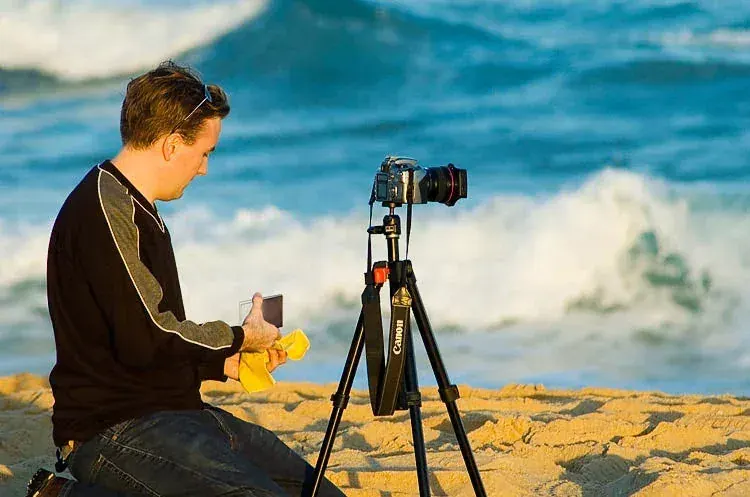
Salt air camera care means wiping the body, lens and tripod with a damp microfiber cloth and fresh water after every session, keeping salt crystals off glass and moving parts, and storing gear dry with silica gel. Salt attracts moisture and causes corrosion, so frequent short cleanings protect your camera better than one deep clean.
Why It Matters
Coastlines are among the best places to photograph, but sea spray and salty air are hard on gear. Fine salt particles drift on the wind, settle on dials, mounts and lens barrels, and slowly attract moisture from the air. That mix leads to sticky controls, corroded contacts and scratched glass.
Most damage is slow and avoidable. A few minutes of cleaning after each trip, plus good storage habits, can keep a camera working for many years near the sea.
Beginner Simple Salt Air Camera Care After Every Session
You do not need special products to protect a camera near the sea. You need fresh water, a soft cloth and a routine you repeat every time.
During The Shoot
- Keep the camera in a bag or under a jacket when you are not shooting, especially near breaking waves.
- Do not change lenses or open the battery and card doors on the beach, where wind carries salt and sand into the openings.
- Use a clear protective filter or a lens hood on the front of the lens so that spray lands on the filter instead of the front element.
- Carry a small blower and two or three microfiber cloths in a sealed bag.
- Face away from the wind when you must stop to adjust something.
After The Shoot
- Wipe the body, lens barrel, strap hardware and buttons with a microfiber cloth that is damp with fresh water, not soaking wet.
- Rotate the zoom and focus rings and wipe around them, because salt gathers in the gaps.
- Clean the front element: blow off loose grains first, then wipe gently with a damp cloth, then dry with a clean dry cloth.
- Leave the camera out in a dry room for an hour so that moisture can evaporate before it goes back in the bag.
- Rinse tripod legs and locks with a damp cloth and extend all sections to let them dry.
What To Use
| Item | Use | Avoid |
|---|---|---|
| Microfiber cloth | Damp wipe for bodies and barrels | Dry wiping a salty surface |
| Hand blower | Removing grit before cleaning glass | Canned air, which can spray propellant |
| Fresh water | Dissolving salt on housings and tripods | Soaking the camera or running it under a tap |
| Silica gel pack | Storage in a bag or box | Leaving gear in a damp car |
| Lens cleaning solution | Final polish on glass | Household glass cleaners |
Common Mistakes
- Wiping dry salt off glass, which grinds crystals across the coating like fine sand.
- Putting a wet camera straight into a closed case, which traps moisture and salt.
- Assuming weather sealing makes a camera immune to salt.
- Skipping the tripod, whose leg locks and clamps corrode quickly.
Handy for this: Carbon Fiber Tripod — sharp at slow shutter speeds. (affiliate link)
Advanced Corrosion Risks, Seals And Storage
Why Salt Is So Harmful
Sea salt is hygroscopic, which means it absorbs water from humid air. A thin salty film on metal stays damp even on a dry day, and the dissolved salt forms an electrolyte that speeds up corrosion. Aluminum, brass, steel screws and gold-plated electrical contacts can all be affected. Corrosion appears first on battery contacts, tripod screws, lens mount rings and hot shoe contacts, where different metals touch. Once it starts under a seal or inside a dial it is hard to remove.
What Weather Sealing Really Does
Weather-sealed bodies and lenses use gaskets and tight tolerances to resist dust and light rain. They are not waterproof, and the seals can wear, harden or move out of place with age. Spray that is salty is worse than rain, because it leaves residue behind after the water dries. Treat sealing as extra protection, not permission to ignore the coast. The lesson on weather sealed cameras explains which parts are protected and which are not. For wet days a rain cover or underwater housing gives more protection than a seal alone.
Lens Wipe Technique
Salt on a front element must be dissolved before it is wiped. Start with a blower, then fold a clean microfiber cloth, dampen one corner with fresh water or lens solution and lay it flat on the glass. Use light pressure and a spiral motion from the center to the edge, then finish with a dry area of the cloth. Replace cloths that look gritty. For coatings and tools see cleaning camera lenses. Never use paper towels or a shirt, because they can scratch coatings.
Contacts, Ports And Compartments
Once the outside is clean, check battery contacts, memory card slots and port covers. If you see a white or green crust on a contact, remove the battery, and clean it with a cotton swab lightly dampened with isopropyl alcohol of 90 percent or higher, then let it dry fully. Do this only on contacts you can see and reach. If corrosion reaches inside a lens or body, stop using it and have it serviced. A service center can clean and re-lubricate parts, and doing this early is cheaper than a repair after a failure.
Storage With Silica Gel
After cleaning, store gear in a bag or hard case with silica gel packs. These absorb moisture and keep humidity lower, which slows corrosion and fungus growth on lens elements. Choose packs that change color or can be dried in an oven or microwave according to the maker instructions. Keep storage away from the garage or car, where temperature changes cause condensation. If you move from the cold to a humid hotel, see fogged lens fix for how to avoid moisture inside the lens.
Packing For The Coast
A short packing list helps. Bring one body with a general zoom, so you change lenses less. Add a rain sleeve, a rubber-hooded lens, a blower and a cloth in a sealed bag. For more planning see travel gear packing.
Try It
- Pack a damp microfiber cloth in a zip bag, a blower and a dry cloth before your next beach trip.
- After shooting, wipe the body, lens barrel, strap clips and tripod legs with the damp cloth.
- Clean the front element with a blower first, then a gentle damp wipe and a dry polish.
- Store the camera in a bag with a silica gel pack and check the contacts and tripod locks for white crust.
Common Questions
Can salt air damage a camera?
Yes. Salt attracts moisture and speeds corrosion on metal parts, contacts and screws, and it can scratch lens glass if wiped dry. Regular cleaning with fresh water prevents most problems.
How do I clean salt spray off a camera?
Wipe the body and lens barrel with a microfiber cloth dampened with fresh water, then dry it. Blow loose grains off the glass first, then clean the element gently with a damp cloth.
Is a weather-sealed camera safe at the beach?
It has better protection than an unsealed one, but it is not waterproof or salt-proof. Wipe it after every session and avoid changing lenses near spray or blowing sand.
Should I use a UV filter at the coast?
A clear filter can protect the front element from spray and is cheaper to replace than a lens. Use a good quality filter, and clean it often, because a dirty filter lowers contrast.
Related Lessons
- Weather Sealed Cameras for what seals can and cannot protect.
- Cleaning Camera Lenses for safe wiping methods on glass and coatings.
- Fogged Lens Fix for handling moisture when you move between climates.
- Sensor Cleaning for dealing with salt and dust that reach the sensor.
- Travel Gear Packing for building a small, protected kit for coastal trips.
Gear That Helps With This
Hand-picked kit that makes this lesson easier to put into practice.
Some links are affiliate links: if you buy through them we may earn a small commission at no extra cost to you. How this works.