
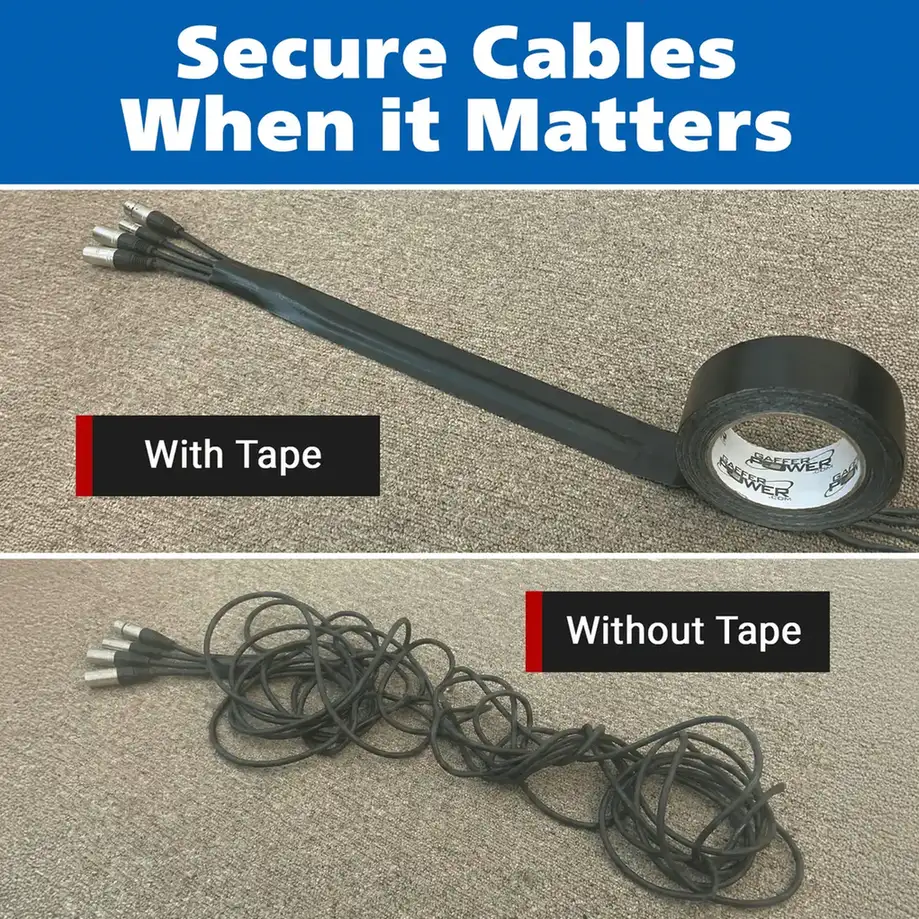
Gaffer tape field fixes are small repairs and setup tricks done with cloth tape that tears by hand, has a matte finish and peels off with little residue. Photographers use it to label cables, cover glowing LEDs, hold gels, secure cords to floors and stands, and mark settings, without the sticky mess that ordinary duct tape often leaves behind.
Why It Matters
Location work rarely goes exactly to plan. A cable trails across a walkway, a bright standby light spoils a dark scene, a lens hood will not stay put, or three identical battery chargers end up in one pile. A roll of the right tape fixes most of these in seconds, and costs far less than the delay of fixing them any other way.
The key is using the correct tape and knowing where it is safe. Gaffer tape was designed for stage and film crews, who need something strong, non-reflective and removable. Understanding its limits keeps your gear safe while you get the benefit.
Beginner Why Gaffer Tape Beats Other Tapes
Gaffer tape is a cloth tape with a matte surface. It tears straight across by hand, so you never need scissors, and it does not shine under lights. Its adhesive is strong enough to hold a cable on a floor all day, yet it usually peels away cleanly if removed within a few days. Compare it with the tapes you may already own.
| Tape | Strengths | Weaknesses |
|---|---|---|
| Gaffer tape | Matte, hand-tearable, strong, removes cleanly in most cases | Costs more per roll, still leaves residue if left for weeks |
| Duct tape | Cheap and very strong | Shiny, stretchy to tear, leaves sticky residue |
| Painter or artist tape | Very gentle, safe on many finishes | Weak hold, peels off in heat or damp |
| Electrical tape | Stretches around small bundles, insulates | Adhesive turns gooey and creeps with heat |
| Spike tape | Thin colored strips for floor and gear marks | Narrow and not meant for heavy loads |
Gaffer Tape Field Fixes To Learn First
- Cover bright LEDs. A tiny standby or charging light can show up in a night shot or a video frame. Fold a small square of tape over it so the glow disappears while the camera still works.
- Label cables and chargers. Put a strip on each end and write a short mark with a marker. Different colored tape for each camera or flash stops mix-ups at the end of the day.
- Secure cables. Tape a cord flat along the floor with two or three long strips so nobody trips over it, or to a stand leg so it does not pull the stand.
- Hold a gel or flag in place. Use small tabs on the edge of a gel over a flash head, or on the edge of a black card that blocks stray light from your lens.
- Make a loop for pulling. Fold a short end back on itself to make a tab that is easy to peel, and mark the start of the roll the same way.
Carry Tape The Smart Way
A full roll is bulky and heavy. Instead, wind a few feet of tape around an old gift card, a pencil, a spare tripod leg or a water bottle, so you always have a handful in the bag. Keep one small roll of a bright color such as yellow or white for visible marks, and one black for hiding things.
Common Mistakes
- Using duct tape on a good camera strap or case, where the residue is hard to remove.
- Leaving tape on a surface for weeks, which lets the adhesive harden.
- Wrapping tape tightly over cables that bend, which can strain connectors.
- Taping too close to a hot lamp, where heat softens the adhesive and makes it ooze.
Handy for this: Carbon Fiber Tripod — sharp at slow shutter speeds. (affiliate link)
Advanced Using Tape Safely On Lenses, Gels And Rigging
Know Which Surfaces Are Safe
Gaffer tape is gentle compared with other cloth tapes, but it is still a strong adhesive. Painted metal, hard plastic, wood and most concrete handle it well. Rubber grips, leatherette, textured camera coatings and some paint can lift when the tape comes off. Never put any tape on a lens glass, a screen or a front filter thread. If you need a mark on a lens barrel, use a small strip of low-tack artist tape and remove it the same day.
Marking Lens Positions Without Residue
On a manual lens or a cine-style zoom, a thin strip of tape on the barrel with a pen mark lets you return to the same focus position. Place the tape on the fixed barrel, and mark the ring with a small dot of tape or a pen line on a separate piece. Locking a zoom ring that creeps downward with a loose wrap of tape is a temporary fix: tape over the ring seam can pick up dust and grit, so wipe the area and consider a proper lens band or zoom lock for ongoing use.
Flash Gels And Spill Control
Colored gels should be attached to the rim or the strap on the flash head, not over the flash tube itself, so the tape never touches the flash window. A flash fired at full power in a small space produces enough heat to warp thin gels, so use a stiffer holder or a gel clip when firing at close range repeatedly. For flags and black wrap, keep the tape on the card side, not the light side, to avoid melting the adhesive. The flash gels lesson covers gel choices in more detail.
Rigging Cables And Stands
Cables that cross a walking route need a flat, wide strip every few feet, or a proper cable cover. For a cable running up a light stand, make a loose loop near the base so any tug pulls on the tape and not on the connector. When taping to a wall or floor in a rented space, test a small patch first and ask the owner, because some wall paints and varnishes lift. Many venues require tape that is labeled as removable, and most will insist on this for historic floors and carpets.
Removing Tape Without A Mess
Peel slowly and at a low angle, pulling the tape back along itself, not straight up. If residue remains, rub it with a clean cloth and a small amount of isopropyl alcohol on hard surfaces, but never on finishes, rubber, screens or coated optics. Do not use alcohol near lens elements. Sun and heat bake adhesive into surfaces, so remove tape from anything left in a car or in direct light as soon as you can.
What Not To Fix With Tape
Tape is a short-term fix. A cracked tripod leg, a failing quick-release plate or a loose lens mount should be repaired or replaced, not wrapped. If a safety strap or a load-bearing clamp needs tape to stay in place, do not use that gear with a heavy camera over people or water. For routine care, follow a regular gear maintenance routine so small faults get fixed before the next trip.
Try It
- Pick one lens, flash and cable in your bag and tape a colored label on each, then see how fast you find them next time.
- Cover any glowing LED on your camera or recorder with a folded square of tape and take a dark-room test shot.
- Wrap three feet of gaffer tape around a pencil and keep it in your bag.
- Practice a safe floor run: tape a cable along a hallway with long flat strips, then remove it and check the floor for residue.
Common Questions
Is gaffer tape the same as duct tape?
No. Duct tape is shiny, stretchy and often leaves sticky residue. Gaffer tape has a matte cloth backing, tears straight and removes cleanly in most cases, which is why film and stage crews prefer it.
Can I put gaffer tape on my camera body?
Only on hard, non-rubber parts, and only for a short time. Avoid rubber grips, leatherette and screens, and use low-tack artist tape if you need a mark on a lens barrel.
How do I stop a bright LED from showing in a dark scene?
Fold a small square of matte black tape over the LED, leaving the camera controls free. It blocks the glow without any damage and peels off later.
How long can gaffer tape stay on a surface?
A day or two is usually fine. Past a week, the adhesive can harden, especially in sun and heat, so remove it sooner and test a small patch first.
Related Lessons
- Gear Maintenance Routine for keeping your kit clean and in order between shoots.
- Flash Gels to see how to attach and use colored filters on a flash.
- DIY Light Tent for another cheap build that solves a common problem.
- Camera Bag Choice to decide where a tape roll and small fixes live in your kit.
- Cleaning Camera Lenses for the right way to handle glass and coatings.
Gear That Helps With This
Hand-picked kit that makes this lesson easier to put into practice.
Some links are affiliate links: if you buy through them we may earn a small commission at no extra cost to you. How this works.