
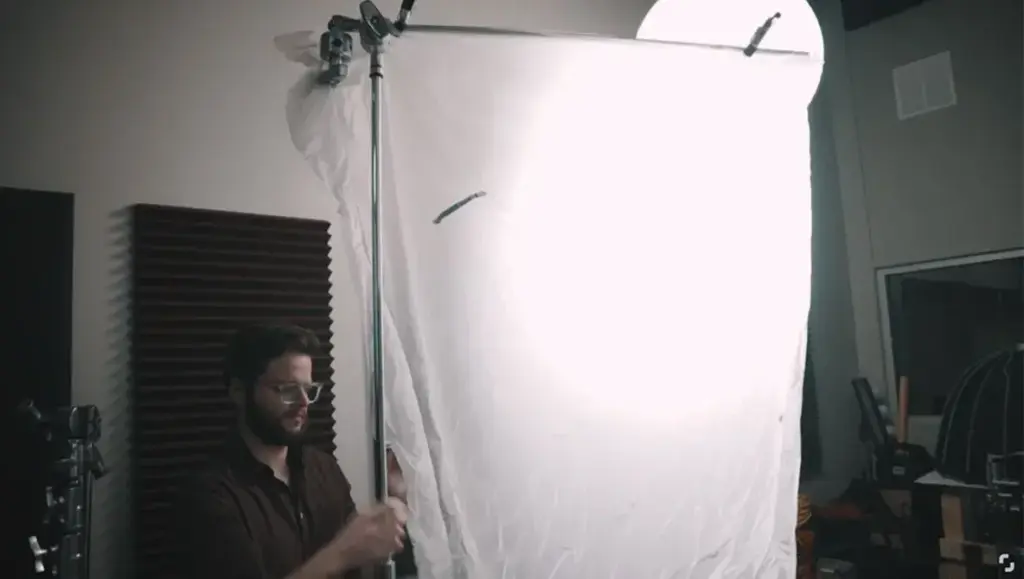
A shower curtain diffuser is a sheet of white or frosted translucent plastic or fabric placed between a light and your subject. It spreads the light over a larger area, which softens shadows and hot highlights. It costs a few dollars, folds flat, and works with window light, lamps, LED panels and flash.
Why It Matters
Soft light is the difference between a portrait that looks flattering and one that looks harsh. Professional diffusion panels and softboxes work well, but they cost real money and take space. A translucent shower curtain is large, light and nearly free, so it is one of the most useful tricks for anyone shooting at home.
The idea works because of one rule: the bigger the light source appears from the subject, the softer the shadows become. A bare bulb or direct sun is a small source and makes hard, crisp shadows. Put a curtain in front of it, and the whole curtain becomes the source. See hard vs soft light physics for the geometry behind this.
Beginner Hanging And Using A Shower Curtain Diffuser
What To Buy
Look for a curtain or liner that is white or frosted and lets light through while hiding the shape of the lamp behind it. Check this in the store by holding it up to a ceiling light. If you can see the bulb clearly, the material is too clear. If the light looks like an even glow, it is right. Ripstop nylon and thin white polyester sheets also work, and they handle heat better than vinyl.
Basic Window Setup
- Pick a window with bright, direct light, such as one that gets sun in the morning.
- Hang the curtain on the inside of the window with painter’s tape, clips or a curtain rod, so it covers the whole glass.
- Place your subject 3 to 6 feet from the window, turned slightly toward it.
- Set exposure for the face, and use exposure compensation of plus one third to plus one if the shot looks dark.
The curtain will cut the light by about one to two stops, so the camera will want a slower shutter speed or a higher ISO. That is the cost of soft light. If you need guidance on trading settings, read equivalent exposures.
Lamp Setup
Hang or clamp the curtain on a light stand, chair back or doorway, and place a lamp behind it. Keep the lamp at least 2 feet behind the fabric. Closer than that, you will see a bright hot spot in the middle of the curtain, and the light will not look even. Use LED or fluorescent bulbs, because halogen and old incandescent bulbs get hot enough to melt vinyl or start a fire.
| Light Source | Distance Behind Fabric | Notes |
|---|---|---|
| Window with direct sun | Fabric against glass | Best for large, soft portraits |
| LED lamp or panel | 2 to 3 feet | Safe, cool and easy to move |
| Speedlight flash | 1 to 2 feet | Aim through the fabric; expect a loss of about one stop |
| Halogen or hot bulb | Not recommended | Heat can melt vinyl or ignite fabric |
Common Mistakes
- Leaving wrinkles in the fabric, which show up as bright and dark streaks in the light.
- Putting the subject too far from the curtain, which shrinks the source and brings back harder shadows.
- Letting direct light spill around the edges of the curtain onto the subject.
- Ignoring a green or blue tint in the fabric and shooting with auto white balance.
Handy for this: Softbox And Light Kit — soft, flattering light. (affiliate link)
Advanced Distance, Layers And Color Control
Source Size And Distance
Softness depends on the size of the source relative to your subject distance. A curtain 5 feet wide and 3 feet from the subject covers a large angle of the scene, so the light wraps around the face. At 10 feet away, the same curtain looks much smaller and the shadows sharpen. For portraits, bring the curtain as close as the frame allows. Edges of the diffusion panel should stay out of the picture, so check the top and sides in your viewfinder.
Light Falloff
Moving the subject closer to the diffuser also changes brightness quickly. Light drops with the square of distance, so halving the distance from the panel to the subject gives roughly four times the light. This is the same effect covered in inverse square law. In practice, it means the background gets darker when the subject sits near the curtain, which gives a natural, moody separation without any extra gear.
Layering Fabrics
One layer of thin white fabric usually removes one stop. Two layers remove closer to two stops and give a more even look, but they also add color shifts and wrinkles. For strong sun, use two layers, or a layer of curtain plus a bedsheet. For a dim room, use a single layer. Always keep the layers a few inches apart if you can, because layers touching each other can create odd patterns.
White Balance And Color Casts
Many curtains are not neutral. Frosted vinyl can lean slightly blue or green, and sheets can look yellow. Fix this with a custom white balance shot of a gray card or a white sheet of paper placed in the diffused light. If you do not have a card, shoot RAW and correct it later. The lesson on custom white balance covers the steps, and white balance science explains why materials shift color.
Mixing With Other Light
A diffused window gives daylight color, near 5500K. If a ceiling lamp is also on, it adds an orange tint to one side of the face. Turn off the room lights, or match them by swapping bulbs, so there is one color of light on the subject. For more on mixed sources, see mixed lighting color.
Pairing With A Reflector
A curtain softens the light but does not fill shadows by itself. Place a white card or foil reflector on the opposite side of the subject to bounce light back into the shadow side. A homemade foil reflector works well, and the standard options are covered in reflectors and diffusers.
Try It
- Hang a white shower curtain over a bright window and photograph a friend or a houseplant at 3 feet from it.
- Take the same picture without the curtain and compare shadow edges and highlights on the face or leaves.
- Move the subject to 6 feet from the curtain and see how the shadows harden again.
- Shoot a gray card inside the diffused light and set a custom white balance, then compare it with auto white balance.
Common Questions
Can I use a shower curtain liner instead of a curtain?
Yes. A frosted or white liner works well because it is thin and often evenly translucent. Test it first by holding it to a lamp. If you can see the bulb outline clearly, add a second layer.
Will a shower curtain diffuser work with flash?
It can. Place the curtain 1 to 2 feet from the flash and aim through it. Expect to lose about one stop, so raise the flash power or open the aperture. Keep the fabric a safe distance from the flash head.
How do I stop wrinkles from showing in the light?
Hang the fabric from the top so it falls straight, and stretch it with clips at the bottom. Steam or a cool iron on a cotton sheet removes wrinkles. Do not iron vinyl, because it melts.
Is a shower curtain better than a white bedsheet?
Both work. Plastic and nylon are lighter and easier to stretch, while a cotton sheet is cheaper and handles heat better. A sheet also tends to give a slightly warmer, softer result.
Related Lessons
- Reflectors And Diffusers for the commercial versions of this idea.
- Hard Vs Soft Light Physics to see why larger sources soften shadows.
- Window Light Photography for ways to place a subject near a window.
- DIY Foil Reflector to fill shadows on the side away from the curtain.
- Custom White Balance to correct tints from the fabric.
Gear That Helps With This
Hand-picked kit that makes this lesson easier to put into practice.
Some links are affiliate links: if you buy through them we may earn a small commission at no extra cost to you. How this works.