
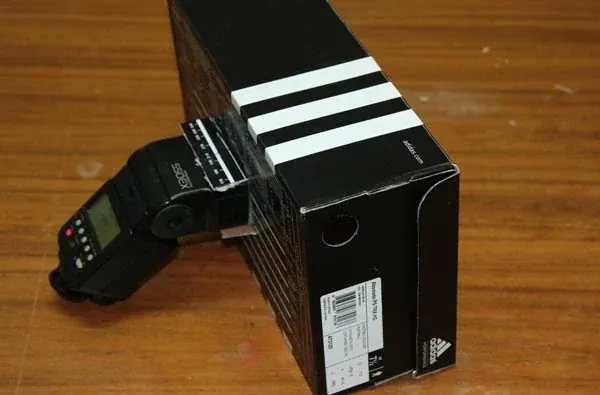
A shoe box light modifier is a cardboard box cut and lined to shape light from a small flash or lamp. Cut a hole for the light at one end, line the inside with foil or white paper, and cover the open front with parchment paper to make a small softbox, or leave it open to make a snoot.
Why It Matters
A bare flash or lamp is a small, hard light. It makes crisp shadows, shiny highlights and obvious reflections, which can look harsh on faces and on glossy products. A modifier changes how big the light looks to the subject, and size is what makes light soft.
You do not need to spend money to learn this. A shoe box, a pair of scissors, tape and a few household materials make a modifier good enough for small product shots, close portraits and macro work, and building one teaches how light behaves.
Beginner How To Build A Shoe Box Light Modifier
The idea is to put the light inside a box and let it leave through an opening you control. A large, diffused opening makes a softbox. A small, tube-shaped opening makes a snoot that throws a tight pool of light. Both share the same starting box.
What You Need
- A shoe box with a lid, or any sturdy cardboard box of similar size.
- Scissors or a craft knife and a ruler.
- Aluminum foil or white paper and glue or tape.
- Parchment baking paper, tracing paper or a thin white fabric for the diffuser.
- Black tape or black card to block unwanted light.
Making A Small Softbox
- Cut a hole in one short end of the box, just large enough to push the head of your flash or the neck of a small lamp through.
- Cut away most of the opposite end, leaving a border about one centimeter wide.
- Line the inside with crinkled foil or smooth white paper so light bounces forward instead of being absorbed.
- Tape two or three layers of parchment paper over the open front to diffuse the light.
- Seal gaps around the flash head with black tape so no light leaks out of the back.
Making A Snoot
Leave the front uncovered and reduce it to a small opening, or roll black card into a tube and tape it over the front. A longer tube makes a narrower beam. The result is a small circle of light that you can aim at a hand, a face or a product detail.
Which Version Fits What
| Modifier | Effect | Good For |
|---|---|---|
| Open box with parchment front | Softer, more even light | Portraits, small products |
| Snoot tube | Narrow, controlled beam | Accents, hair light, details |
| White interior, no diffuser | Moderate softening | Quick fill light |
| Foil interior | Brighter, harder light | When you need more output |
Safety And Setup
A small speedlight produces little heat, so it is safe inside a cardboard box for a few shots. A hot incandescent bulb is not, because paper and cardboard can scorch or catch fire. Use an LED lamp for continuous light and keep it away from the box walls. Hold the box on a stand or clamp, and trigger the flash with a cable or wireless trigger so you can move it freely.
Common Mistakes
- Using only one thin sheet of diffusion and expecting soft light from a tiny opening.
- Placing the modifier too far from the subject, which makes the light small and hard again.
- Letting light spill from gaps in the box and lighting the background.
- Forgetting that diffusion costs light, so a flash may need more power.
Handy for this: Softbox And Light Kit — soft, flattering light. (affiliate link)
Advanced Diffusion, Size Versus Softness And Flagging
Why Size Matters
Light softness depends on how large the source looks from the subject, compared with the subject itself. A 20 centimeter box opening placed 30 centimeters from a face is a large source and gives gentle shadow edges. The same opening placed two meters away is small and gives crisper shadows. So the most useful setting on a shoe box modifier is its distance. Bring it as close as you can without entering the frame. The physics behind this are explained in hard versus soft light physics.
Choosing Diffusion Material
Different materials trade softness for brightness. White ripstop nylon, a piece of a white shower curtain or a thin bed sheet passes more light than thick baking paper, while two or three layers of tracing paper soften more but lose about a stop each. Test with a gray card, because each layer cuts output and shifts color slightly. A single flat sheet placed a few centimeters in front of the source also works better than one pressed against it, because the gap lets light spread across the surface before it exits. See shower curtain diffuser and reflectors and diffusers for other materials.
Output Loss And Exposure
A flash fired into a box loses light to absorption, and the diffuser removes about one to two stops more. Expect to raise manual power by that amount, or use a lower aperture or higher ISO. For through-the-lens exposure, check whether the camera compensates correctly, because a box can fool the preflash. Manual power is more predictable for repeat setups, so write the power setting down and place the box at the same distance every time.
Flagging Spill
Any light that leaves the box sideways or spills onto the background reduces contrast and makes the picture look flat. Flag it by taping black card or black tape around the edges of the box front, and use another piece of card as a separate flag between the box and the part of the scene you want dark. You can also paint or line the interior of a snoot black to prevent internal reflections from widening the beam.
Light Direction
A side light from the box carves out texture, while a front light fills shadows. For a portrait, try the box at 45 degrees to the face and slightly above eye level. For a product, place it to one side and add a white card opposite to bounce light back into the shadows. These positions are the building blocks of the one light setup, which gives a full set of results from a single source.
When To Upgrade
The box will bend, sag or get dirty, and its size limits portrait work to close, tightly framed shots. If you keep using the technique, a folding softbox with a proper speedlight mount gives bigger, steadier and more repeatable light. Even then, the lesson of the box stays valid: bigger and closer means softer.
Try It
- Build the softbox with a foil lining and two layers of parchment, then photograph a small object with it about 30 centimeters away.
- Move the box to one meter away without changing anything else and note how the shadow edges become harder.
- Remove the diffuser, add a black tube to make a snoot, and light just one part of the object.
- Tape black card around the edges and compare background brightness before and after.
Common Questions
Can I use a shoe box with a hot lamp?
Not a bright incandescent or halogen lamp. Cardboard can scorch or burn. Use an LED lamp or a small flash, and keep any bulb away from the walls.
How soft will the light from a shoe box be?
Only as soft as its opening is large compared with the distance to the subject. Used within a foot or so of a small subject, it gives pleasing soft light. At a distance it behaves like a small hard source.
What is the best material for the diffuser?
Parchment paper and tracing paper are easy and cheap. White ripstop nylon passes more light. Use two layers when you want a softer look and add flash power to compensate.
Do I need to line the box with foil?
No. White paper gives a softer, less contrasty result. Foil gives a brighter, harder light. Choose based on whether you want more output or a gentler effect.
Related Lessons
- Reflectors And Diffusers for more ways to shape and soften light.
- Hard Vs Soft Light Physics for why source size matters.
- Off-Camera Flash to trigger and place a flash away from the camera.
- One Light Setup for ways to use a single light.
Gear That Helps With This
Hand-picked kit that makes this lesson easier to put into practice.
Some links are affiliate links: if you buy through them we may earn a small commission at no extra cost to you. How this works.